
 84
After the U.S. site, Amazon Japan is also coming to JD.
On November 13, Amazon Global Store announced that the 2026 Black Friday global shopping season will run from November 19 to December 7. On this occasion, the official Amazon Japan overseas flagship store will also officially launch on JD Worldwide, with the first batch of listed products expected to exceed 1 million items.
This cooperation has further expanded JD Worldwide's pool of overseas products.

Image source: Amazon Global Store
In fact, Amazon and JD have already cooperated before. During Black Friday 2024, the official Amazon U.S. overseas flagship store officially joined JD Worldwide, with more than 400,000 overseas products launched in the first batch. After two years of development, the store's total number of products has exceeded 2 million, covering more than 7,500 international brands.
In June this year, Amazon Global Store held a mid-year major promotion, and the JD App also set up a dedicated event venue; the two sides also collaborated around product discounts.
From the U.S. site to the Japan site, from initial product onboarding to joint promotions, the cooperation between the two platforms is gradually deepening. This time, the Japan site's participation also gives JD consumers access to more Japanese local products.
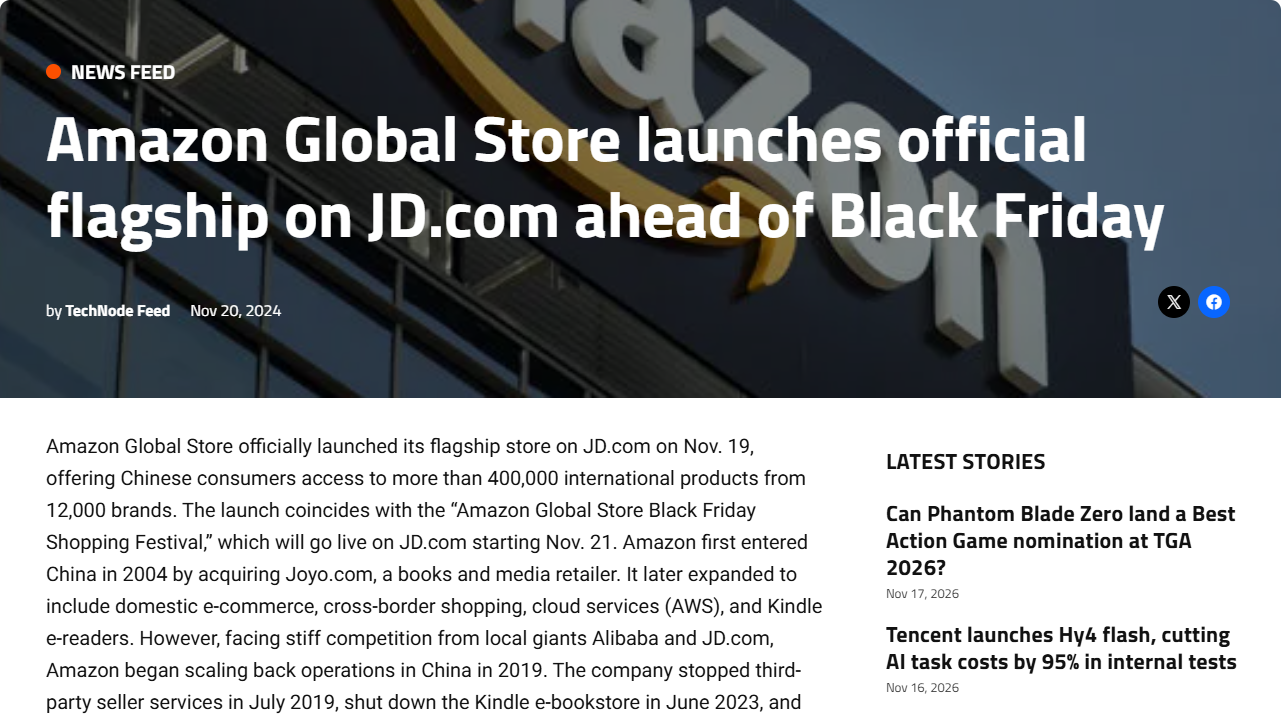
Image source: technode
One wants traffic, the other wants good products
Why did Amazon choose JD? The answer is actually not complicated: it needs more Chinese consumers.
Although Amazon Global Store has operated in China for many years and has its own app and WeChat mini program, for many consumers, specifically opening an overseas shopping platform to shop is still not a daily habit.
JD, on the other hand, has a mature user base and shopping scenarios. By joining JD, Amazon can use ready-made traffic entrances to let more consumers see its overseas products, and it also saves part of the cost of rebuilding consumer touchpoints.
What JD values is the overseas product resources in Amazon's hands.
Today, domestic consumers have more and more channels for buying imported goods. Competition between platforms is no longer just about price and logistics; whether products have distinctive features also affects consumers' choices.
Especially in the Japanese market, some home goods, kitchenware, and stationery with a strong sense of design have always had a relatively stable consumer group in China.
Li Yanchuan, head of Amazon Global Store Asia-Pacific and China business, once mentioned that JD consumers are relatively interested in home goods, kitchenware, and stationery with Japanese design characteristics. Therefore, this Black Friday product selection includes well-known Japanese brands such as Noda Enamel and Sori Yanagi.
For JD, introducing the Amazon Japan store can both supplement imported product resources and further enrich the platform's consumer choices.

Image source: google
The battle for overseas products: channels also matter
In addition to adding products, the two sides also plan to launch a joint gold list, referencing information such as sales, reputation, and popularity to screen popular products and distinctive products and help consumers find their desired products faster.
At the same time, Amazon Global Store will also open a Black Friday pop-up store in Hangzhou, allowing consumers to touch and experience some products offline.
These actions may seem scattered, but in fact they all point to the same goal: making overseas products easier for domestic consumers to discover and purchase.
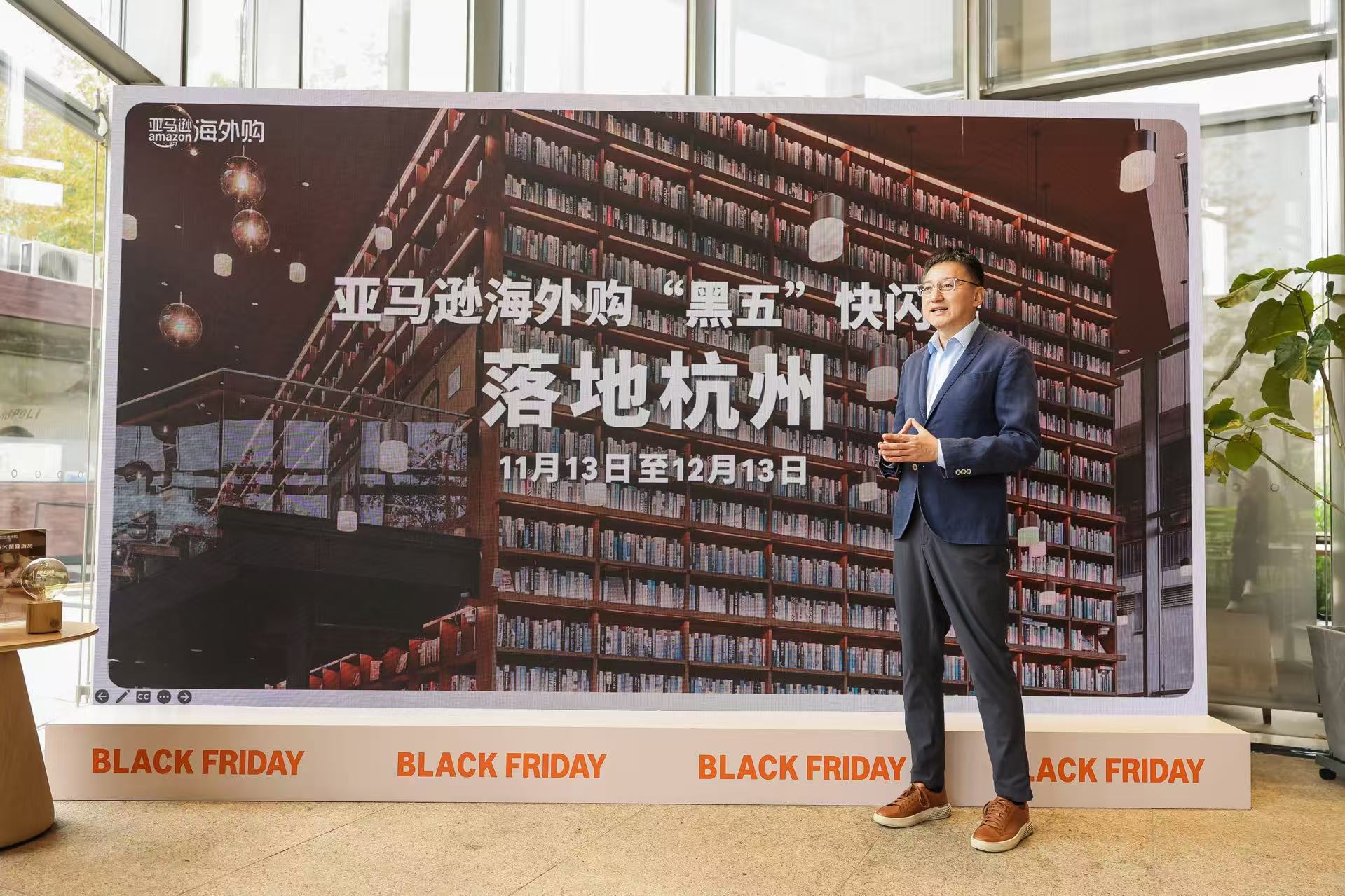
Image source: World Zhejiang Entrepreneurs
In the past, when consumers wanted to buy some niche overseas brands, they might need to specifically look for overseas shopping channels. Today, as platforms such as JD Worldwide and Tmall Global continue to expand imported goods, more and more overseas products have entered shopping platforms familiar to consumers.
This also gives overseas retail platforms like Amazon a new approach to cooperation: rather than seeking traffic on their own, they can leverage mature local e-commerce channels to bring products before more potential buyers.
For JD.com, continuously bringing in overseas brands and retail resources is also a way to enrich the platform's supply and enhance its competitiveness.
From this perspective, the Japan site's opening on JD.com is not merely a simple store expansion. It reflects that more direct cooperative relationships are taking shape between domestic e-commerce platforms and overseas retailers.
In the future, whether the two sides will expand their cooperation to more countries and regions remains to be seen. But it is certain that in the imported consumer goods market, who can offer a richer variety of products and who can reach consumers more effectively will remain an important part of platform competition.