
 65
The platform only covers 50%, so sellers have to swallow the rest?
Starting December 7, TikTok Shop Vietnam's local and cross-border sites will simultaneously implement a new rule on responsibility for return shipping fees.
The new rule applies to orders generated on and after that date. The core change is that when a return is determined to be the buyer's responsibility, the return shipping fee will be borne by the seller.
This adjustment appears to be only a minor change in who bears the shipping fee, but it actually affects sellers' cost structure and category operation logic.

Image source: Google
What counts as buyer responsibility? How is the shipping fee shared?
First, the boundaries of the rule must be clarified. This adjustment only targets returns caused by buyers' subjective factors, specifically covering three situations: changing their mind about the purchase, the size not being suitable, and selecting the wrong size.
Moreover, it does not apply to all categories. Only products whose detail pages clearly indicate that they meet the conditions fall within the scope of the rule, and return requests must also be submitted within the time limit specified by the platform.
Next, look at how the shipping fee is shared. For returns that are the buyer's responsibility and meet the above conditions, the return shipping fee will be borne by the seller; Mall sellers can get 50% fee support from the platform, while the other 50% still has to be borne by themselves.
At the same time, the platform will launch a voluntary shipping insurance plan, through which sellers can hedge part of the potential costs.
Categories with high return rates bear the brunt
The impact of the new rule on sellers is not evenly distributed, but concentrated in categories whose return rates are already relatively high. For size-sensitive products such as clothing and footwear, return rates have long been higher than the platform average, and 'size not suitable' and 'wrong size selected' are exactly the buyer-responsibility situations explicitly included in this new rule.
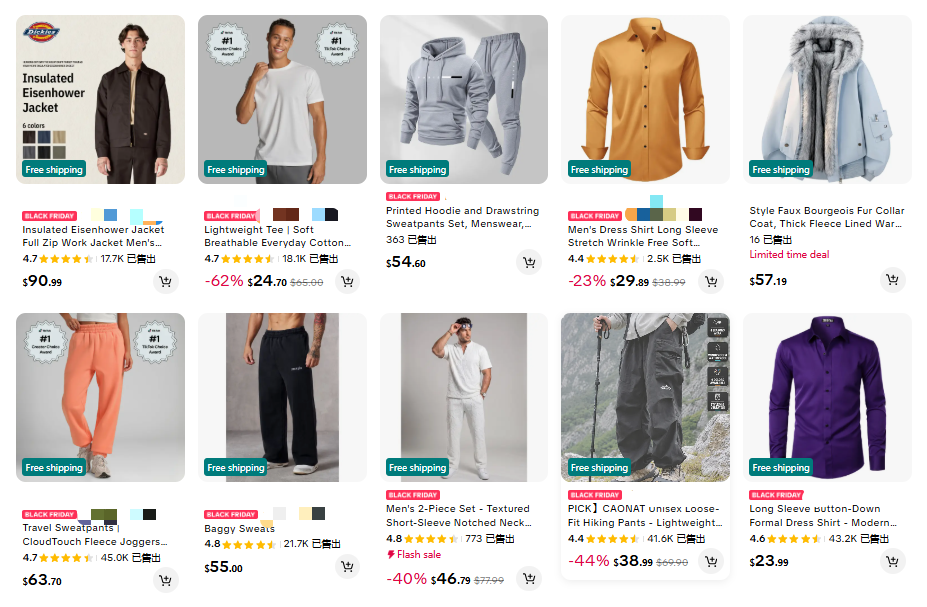
Image source: TikTok Shop
In the past, the return shipping fee for such returns was borne by the buyer, and sellers only had to handle refunds and inventory; now the shipping fee is shifted to the seller, adding a rigid expense to every return. For products with low average order value and already thin gross margins, this shipping fee may directly eat into profit space, or even turn originally marginally profitable orders into losses.
What is more alarming is the movement of the break-even line. For categories with high return rates, the shifting of shipping fees is not an occasional cost but a structural cost. If sellers still calculate gross margins based on old shipping fee assumptions, they may unknowingly fall into the trap of the more they sell, the more they lose.
Sellers' response strategies
In the face of rule changes, sellers do not have to passively accept them. The reference information has already pointed out two things that must be done in advance; here we expand on the implementation logic.
The first thing is to check the return labels on product detail pages. The new rule takes the condition-compliant labeling on detail pages as a precondition for application, so sellers need to check product by product whether the labels are accurate and consistent with the actual policy.
For size-sensitive categories, the size chart, fit description, and model try-on information on detail pages should be optimized simultaneously to reduce the probability of selecting the wrong size at the source. This is both a compliance action and a cost-control measure.
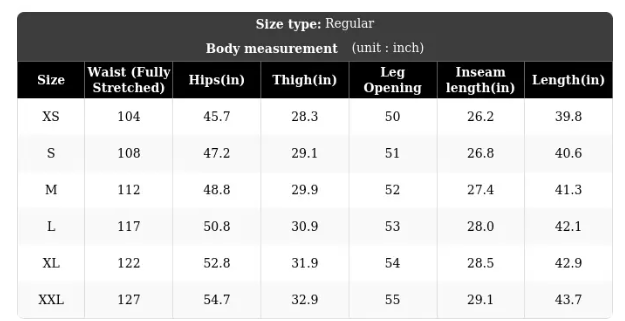
Image source: TikTok Shop
The second thing is to recalculate the gross margins of high-incidence categories such as clothing and footwear according to the new rule. Recalculation is not simply adding the shipping fee into costs; it requires breaking down return rate data by category and by SKU, and calculating the real break-even line after the shipping fee shift. Which styles can still preserve profit, which styles need price adjustments, and which styles are simply unsuitable for continued distribution—all must be answered with new data.
For Mall sellers, the 50% platform support can partially ease the pressure, but the remaining 50% still needs to be included in costs; for ordinary sellers, whether shipping insurance is worthwhile depends on the balance between their own return rate and the premium.
Conclusion
TikTok Shop Vietnam's return shipping fee adjustment this time is ostensibly a change in the shipping fee sharing ratio, but in essence it redraws the boundaries of seller responsibility and the cost structure.
Before December 7, sellers need to complete two mandatory tasks: page verification and gross profit recalculation; after December 7, every return in categories with a high incidence of size issues will test sellers' cost control capabilities.
Whoever can adapt to the rules earlier and calculate costs more accurately will pay less tuition in the next round of competition.