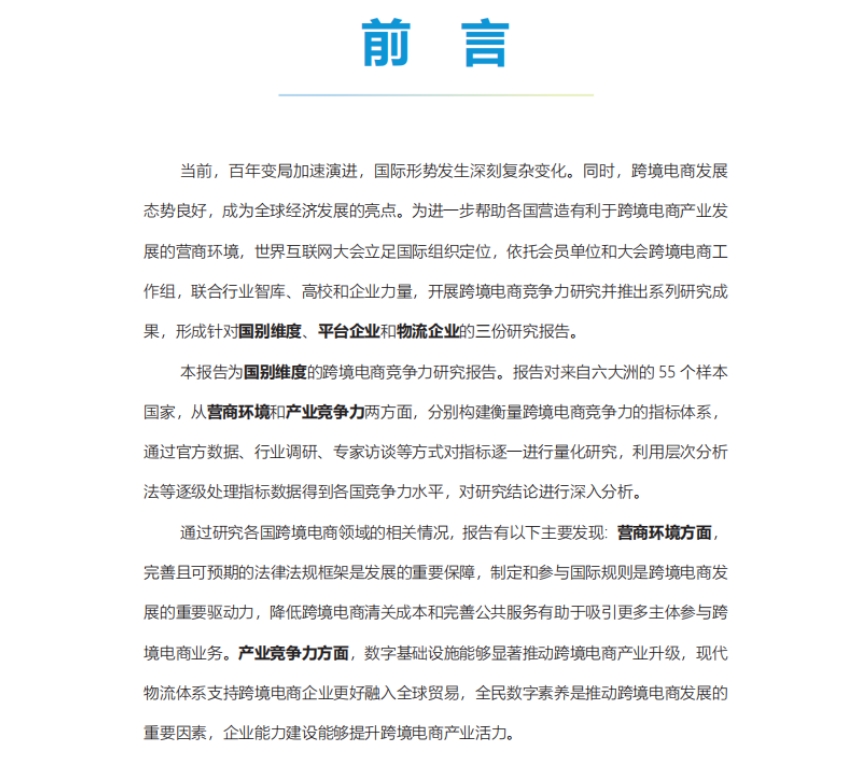
Le « Rapport 2024 sur la compétitivité du commerce électronique transfrontalier (dimension pays) » a été publié par la Conférence mondiale de l'Internet en novembre 2024, visant à aider les pays à créer un environnement commercial favorable et à promouvoir le développement du commerce électronique transfrontalier. En étudiant 55 pays échantillons, le rapport analyse la compétitivité de chaque pays en matière de commerce électronique transfrontalier, y compris l'environnement des affaires et la compétitivité industrielle, et en tire des conclusions et recommandations pertinentes.
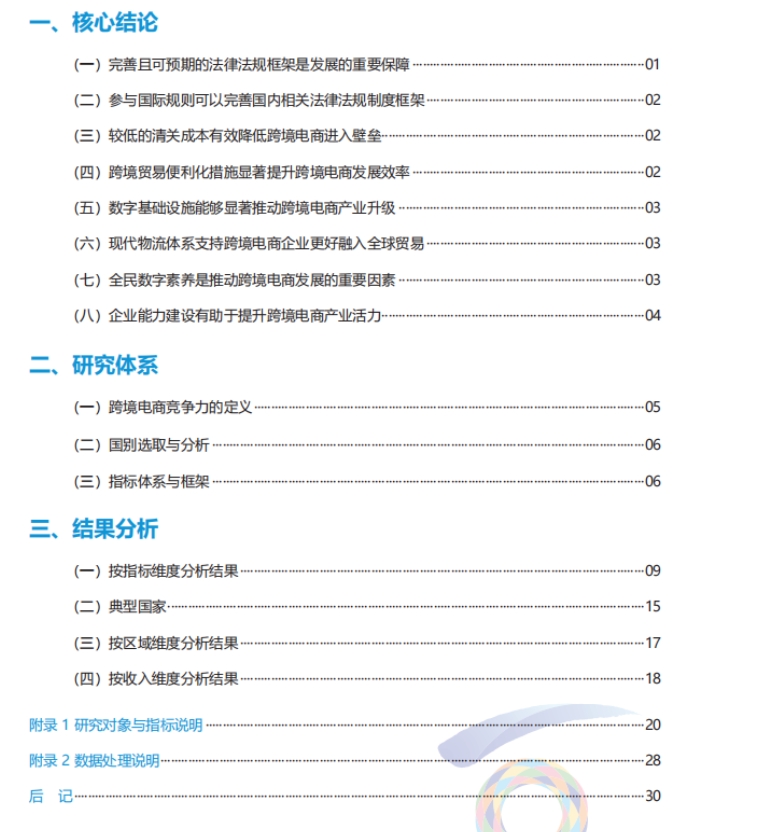
1. Conclusions clés
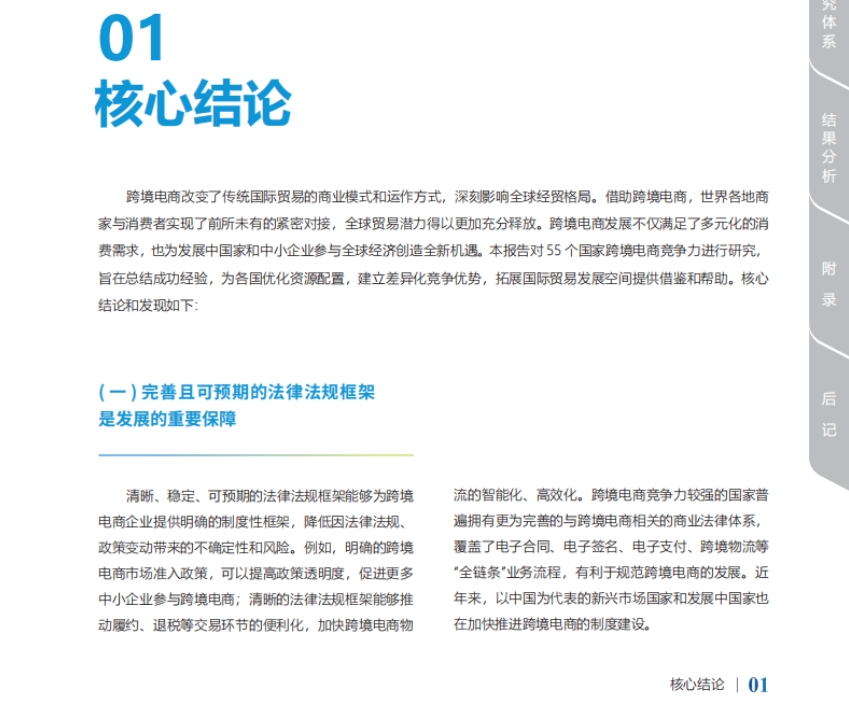
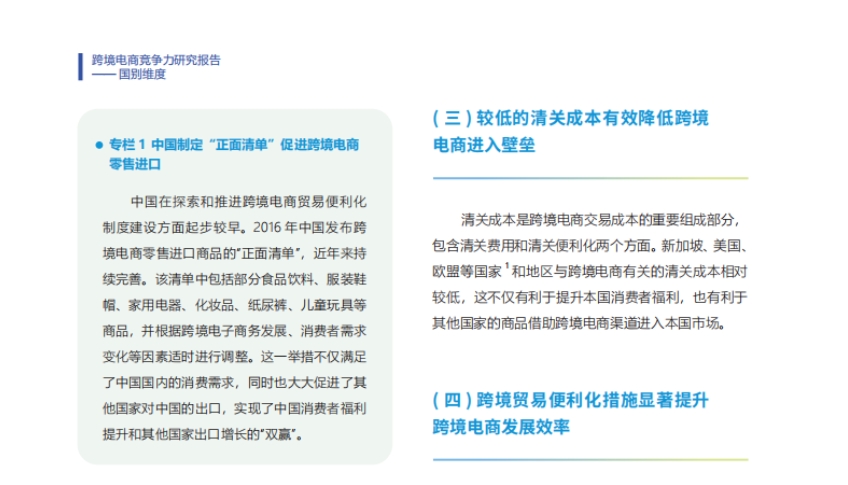
- Cadre juridique et réglementaire : Un cadre juridique complet et prévisible est essentiel au développement du commerce électronique transfrontalier. Par exemple, la Chine a publié une « liste positive » pour promouvoir les importations de détail transfrontalières, et la plupart des pays échantillons participent activement à l'élaboration des règles internationales pour améliorer leur cadre juridique et réglementaire national.
- Coûts de dédouanement et facilitation : Des coûts de dédouanement plus faibles réduisent les barrières à l'entrée du commerce électronique transfrontalier, comme à Singapour, aux États-Unis et dans l'Union européenne. Parallèlement, les mesures de facilitation du commerce transfrontalier améliorent l'efficacité du développement, et la plupart des pays échantillons ont établi un système juridique de « guichet unique » pour le commerce international.
- Infrastructures numériques et systèmes logistiques : Les infrastructures numériques favorisent la modernisation industrielle. Par exemple, la Chine dispose d'un écosystème de paiement mobile de pointe et d'un déploiement commercial à grande échelle de la technologie Internet mobile. Les systèmes logistiques modernes aident les entreprises à s'intégrer dans le commerce mondial, comme ceux de l'Allemagne et du Japon, qui sont relativement avancés.
- Culture numérique universelle et renforcement des capacités des entreprises : La culture numérique universelle est un facteur important ; les consommateurs ayant une culture numérique élevée favorisent le développement du commerce électronique transfrontalier. Le renforcement des capacités des entreprises contribue à dynamiser l'industrie, comme la création de zones pilotes complètes de commerce électronique transfrontalier en Chine et la mise en œuvre de plans de numérisation pour les PME dans des pays comme l'Allemagne.
2. Système de recherche
- Définition de la compétitivité du commerce électronique transfrontalier : Décomposée en deux dimensions : l'environnement des affaires et la compétitivité industrielle. L'environnement des affaires comprend les politiques et lois, la participation aux règles internationales, les coûts de dédouanement, les services publics, etc. La compétitivité industrielle couvre les bases industrielles, les marchés commerciaux, les facteurs de production, etc.
- Sélection et analyse des pays : 55 pays échantillons ont été sélectionnés, en tenant compte de facteurs tels que l'échelle industrielle, les caractéristiques, la représentativité, ainsi que la région et le développement économique du pays.
- Indicateurs et cadre : Un système d'indicateurs pour mesurer la compétitivité du commerce électronique transfrontalier a été construit, comprenant des indicateurs de l'environnement des affaires (comme les politiques et réglementations, l'efficacité des transactions) et des indicateurs de compétitivité industrielle (comme l'économie numérique, les marchés commerciaux).
3. Analyse des résultats
- Analyse par dimension d'indicateur
- Indicateurs de l'environnement des affaires : Les pays développés ont des systèmes de politiques et de réglementations relativement complets et participent activement aux règles internationales. Les pays de marché émergents se distinguent également dans les politiques et les lois du commerce électronique transfrontalier. En matière d'efficacité et de facilitation des transactions transfrontalières, les différences entre les pays sont importantes ; les pays développés ont une efficacité de dédouanement élevée et des coûts faibles, tandis que les pays de marché émergents performent mieux dans les services publics.
- Indicateurs de compétitivité industrielle : Les pays avec une économie plus grande et une base industrielle solide se démarquent en compétitivité de base industrielle. Les pays avantageux en compétitivité du marché commercial disposent de groupes de consommateurs à revenus élevés et d'une situation géographique bien connectée. Les économies plus grandes tendent à montrer une compétitivité plus forte en matière de facteurs de production.
- Analyse de pays typiques : Par exemple, le Canada a des coûts de dédouanement faibles et des avantages évidents dans son réseau logistique. La Chine excelle dans de nombreux domaines comme les politiques et réglementations, et les bases industrielles. L'Allemagne, avec les pays de l'UE, optimise l'environnement des affaires et possède des avantages concurrentiels sur le marché de la consommation et les facteurs de production.
- Analyse par dimension régionale : Les pays avec une forte compétitivité en commerce électronique transfrontalier se concentrent principalement en Asie, en Europe et en Amérique du Nord. Les pays d'Asie et d'Océanie excellent dans la participation aux règles internationales. Les pays européens ont un système juridique unifié et complet. Les pays d'Amérique du Nord présentent des caractéristiques de complémentarité des avantages.
- Analyse par dimension de revenu : Le PIB par habitant est fortement corrélé positivement à la compétitivité du commerce électronique transfrontalier. Les pays à revenu élevé ont un niveau de développement global plus élevé. Les pays à revenu moyen et faible accusent un retard important par rapport aux pays à revenu élevé en matière de politiques et lois, d'efficacité et de facilitation, et de compétitivité du marché commercial. Cependant, certains pays à revenu moyen et faible ont aussi leurs propres avantages dans le développement du commerce électronique transfrontalier, comme la Chine avec ses politiques et réglementations en avance, le Mexique avec une forte compétitivité en politiques et lois et facteurs de production, et la Malaisie avec des avantages en efficacité et facilitation.