Ce document se concentre principalement sur le marché de la logistique transfrontalière en 2024, en analysant l'environnement du marché, les politiques, la taille du marché, les dynamiques du secteur et les tendances futures.
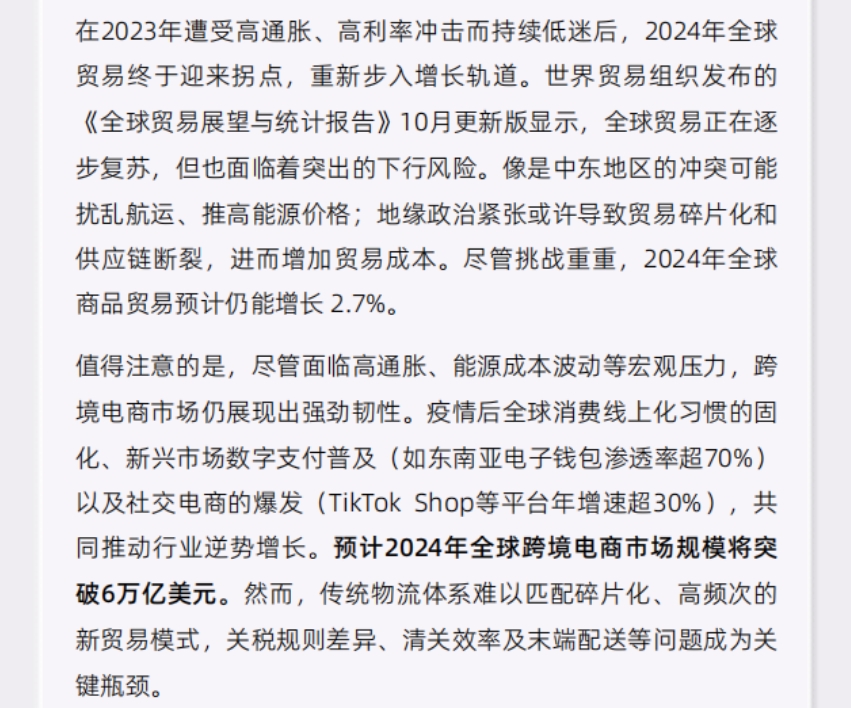
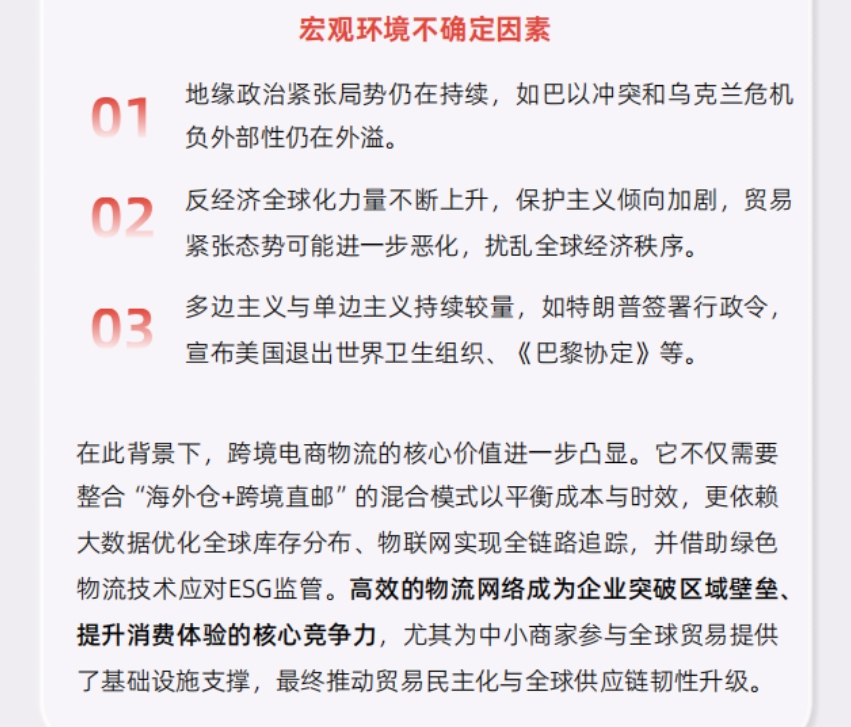
1. Environnement du marché : En 2024, le commerce mondial a commencé à croître après une période de ralentissement, avec une prévision de croissance de 2,7 % pour le commerce des marchandises, mais il est également confronté à des risques tels que le conflit au Moyen-Orient et les tensions géopolitiques. Le marché du commerce électronique transfrontalier se développe fortement, avec une taille prévue dépassant les 6 000 milliards de dollars en 2024. Cependant, le système logistique traditionnel a du mal à s'adapter au modèle de commerce transfrontalier fragmenté et à haute fréquence, avec des problèmes tels que des différences dans les règles tarifaires et une faible efficacité du dédouanement.
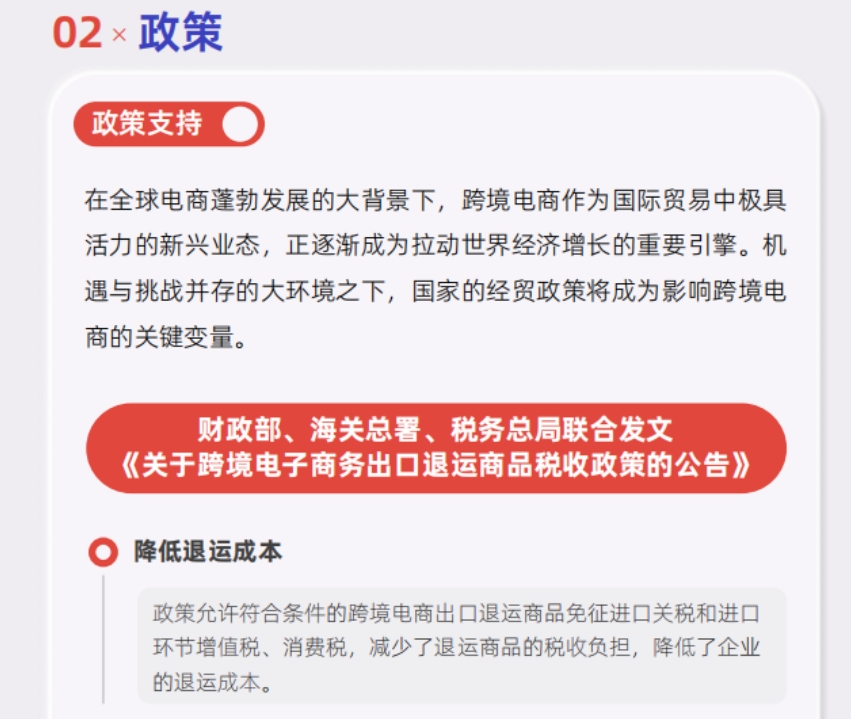
2. Soutien politique : Plusieurs ministères et départements nationaux ont mis en place des politiques pour soutenir le développement du commerce électronique transfrontalier et de la logistique transfrontalière, comme la réduction de la charge fiscale sur les marchandises retournées à l'exportation dans le commerce électronique transfrontalier, le soutien à la construction d'entrepôts à l'étranger et l'offre de soutien financier. Cependant, il y a aussi des changements politiques au niveau international, comme l'ajustement des droits de douane américains sur les produits chinois, ce qui affecte les coûts du commerce électronique transfrontalier et les activités logistiques.
3. Taille du marché : En 2024, le volume des importations et des exportations du commerce électronique transfrontalier de la Chine a atteint 2 630 milliards de yuans, soit une augmentation de 10,8 % par rapport à l'année précédente, les exportations représentant 69,2 % du total. Le nombre d'entreprises liées au commerce électronique transfrontalier continue de croître, avec un nouveau record d'enregistrements en 2024. Les introductions en bourse et les financements dans le domaine du commerce électronique transfrontalier sont actifs, avec plusieurs entreprises cotées en bourse, et les prestataires de services logistiques transfrontaliers ont également obtenu de nombreux financements.
4. Dynamiques du secteur : De nombreuses entreprises investissent activement dans les chaînes d'approvisionnement transfrontalières et à l'étranger, comme Cainiao qui a acquis 4PX, Best Cloud Warehouse qui a annoncé sa stratégie d'expansion à l'étranger, et plusieurs géants des entrepôts à l'étranger qui collaborent avec des plateformes de commerce électronique. En ce qui concerne les modèles de service, le modèle semi-géré émerge. Par rapport au modèle entièrement géré, il présente des avantages en termes de tarification, de gestion des stocks et de délais logistiques, et est plus populaire auprès des vendeurs.
5. Tendances futures : Le développement de la logistique transfrontalière présente à la fois des défis et des opportunités. Les facteurs géopolitiques affectent les coûts logistiques et la capacité de transport, et les entreprises doivent gérer les risques. La taille du marché mondial du commerce électronique transfrontalier continue de s'étendre, avec un fort potentiel sur les marchés émergents, ce qui apportera davantage de volumes d'affaires. Les avantages des entreprises leaders deviendront plus évidents, et la concentration du marché devrait augmenter. Le modèle semi-géré continuera de se développer, les modèles de services logistiques continueront d'innover, et l'application de la logistique intelligente deviendra plus répandue.