 28
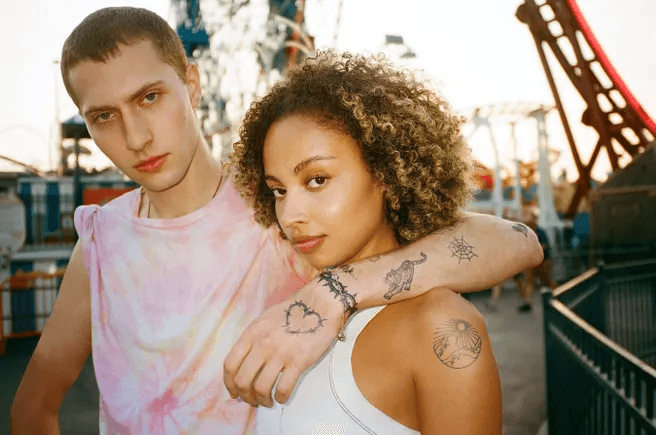
28As the core consumer group of online shopping, Gen Z is keen on self-expression but rejects irreversible body changes.
Against this backdrop, it directly gave rise to a consumption boom in low-risk body decoration.
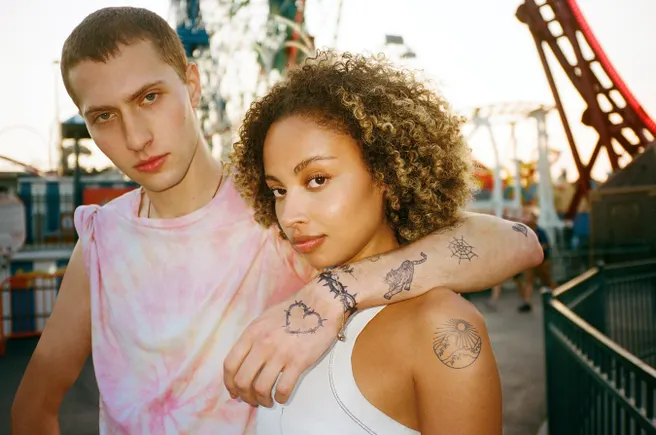
Image source: Google
Tattoos are no longer permanent body marks; instead, they have become a fresh decoration that can be changed at any time. Music festivals, parties, and various trendy outfit scenarios have further ignited market demand.
There is such a brand that precisely seized the opportunity in this track and turned tattoo stickers into fast-moving consumer goods that can be replaced at will,generating $30 million in overseas markets in one year (equivalent to more than RMB 200 million).
It isinkbox。
From a pair of brothers starting from scratch to the product selling explosively around the world, the brand has embarked on a highly representative overseas expansion path.
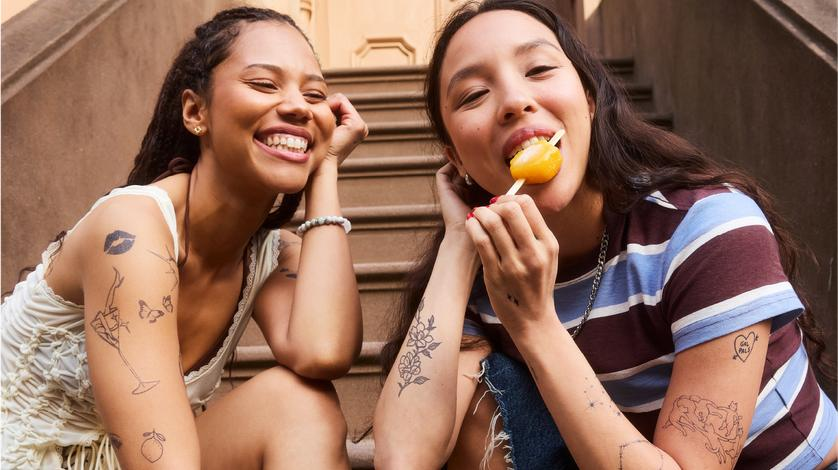
Image source: Google
The two brothers' accidental entrepreneurship
According to public information, the inkbox brand was born in Toronto, Canada, in 2015.
Founders Tyler Handley and Braden Handley are brothers and tattoo enthusiasts themselves. They disliked the pain, irreversibility, and painful removal of traditional tattoos. At the same time, they observed that many people wanted tattoos but were afraid of permanently leaving a mark and regretting it, so they never dared to try.
Based on these pain points, the two decided to start their own business and develop tattoo products that can naturally fade and be replaceable.
During the R&D stage, they noticed that Jagua fruit extract, used by Panama's indigenous people, can form a gray-blue, tattoo-like mark when applied to the skin, and it naturally fades within 7 to 14 days.
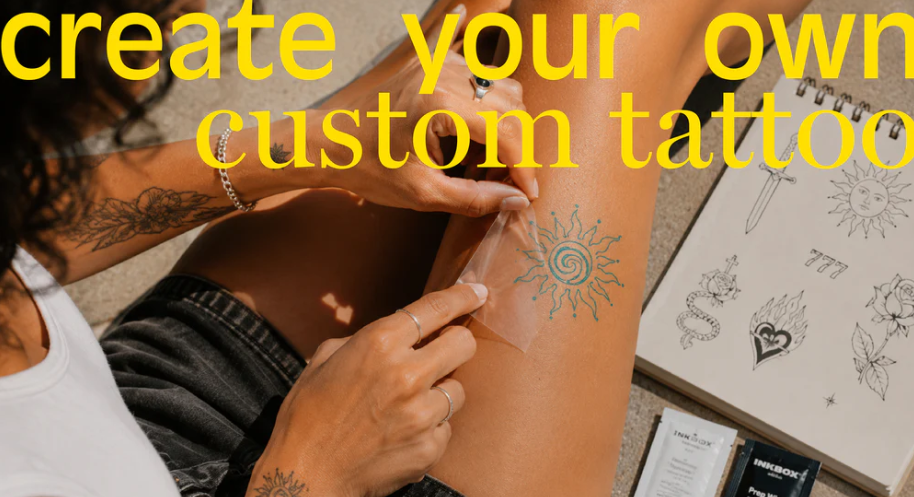
Image source: inkbox
Based on this discovery, Tyler Handley and Braden Handley developed the exclusive patented ink For Now Ink™, dispelling users' concerns and turning tattoos into fashionable accessories that can be changed at will.
In 2015, the two brothers put in $10,000 as startup capital and officially founded inkbox.
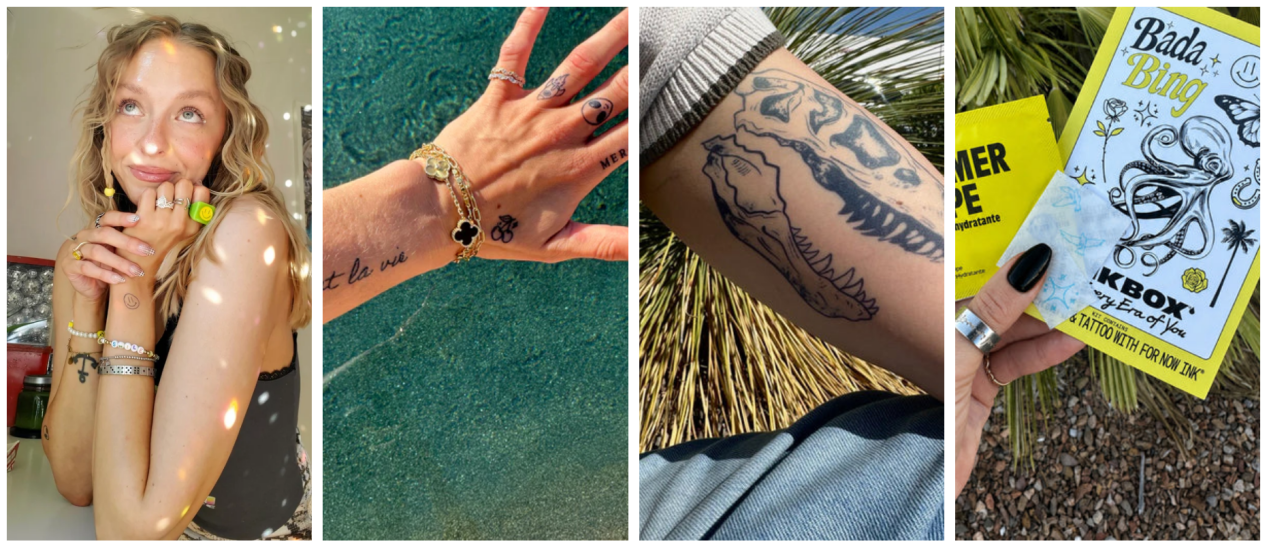
Image source: inkbox
In the same year, the brand chose to cold-start through the crowdfunding platform Kickstarter. The original fundraising goal was $20,000, and the project ultimately attracted 7,500 supporters, raised nearly $300,000, completed 15 times the goal, and successfully accumulated its first batch of seed users.
Three core strategies support user repurchase
Technological breakthroughs are only the first step in winning over consumers. After all, tattoo stickers belong to a one-time impulse-consumption category. To drive continuous repurchases, the brand also needs supporting operational strategies.
To this end, inkbox built three core strategies:
First, build a global artist collaboration system.
The brand has gathered more than 700 independent artists worldwide and developed tens of thousands of original designs for users to choose from, breaking the weakness of competitors' single designs, enriching choices, and strengthening brand uniqueness.
Meanwhile, artists can also receive a share of product sales. This model combining art with commerce means temporary tattoos are no longer just simple stickers, but a wearable medium for self-expression, building a design moat for the product.
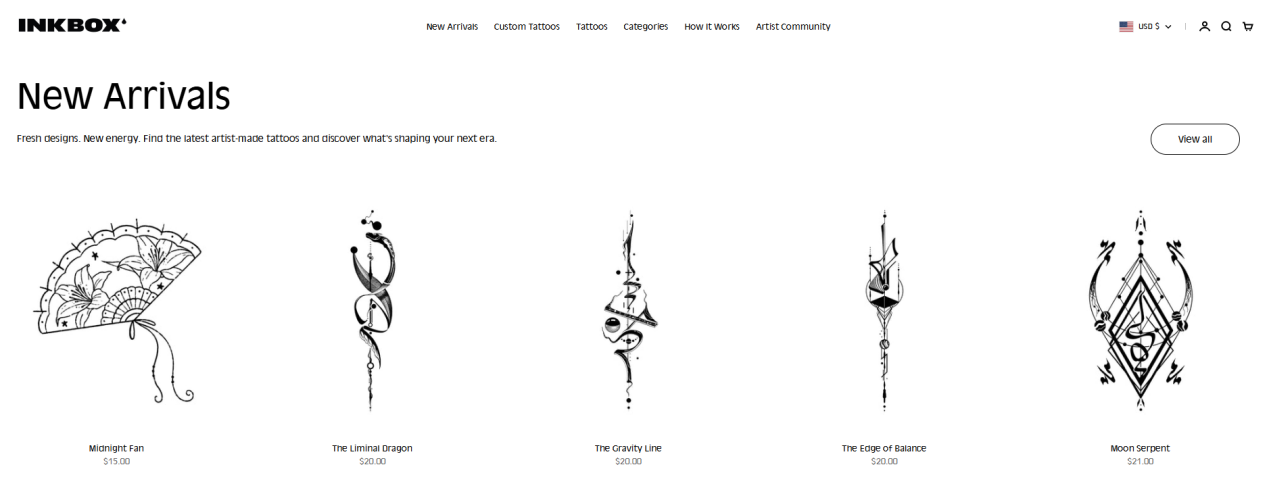
Image source: inkbox
Second, launch cross-industry collaborations.
To increase brand awareness, the brand once collaborated with the globally popular K-pop top boy group BTS, launching co-branded temporary tattoos bearing the group's logo and successfully entering the massive fan market.
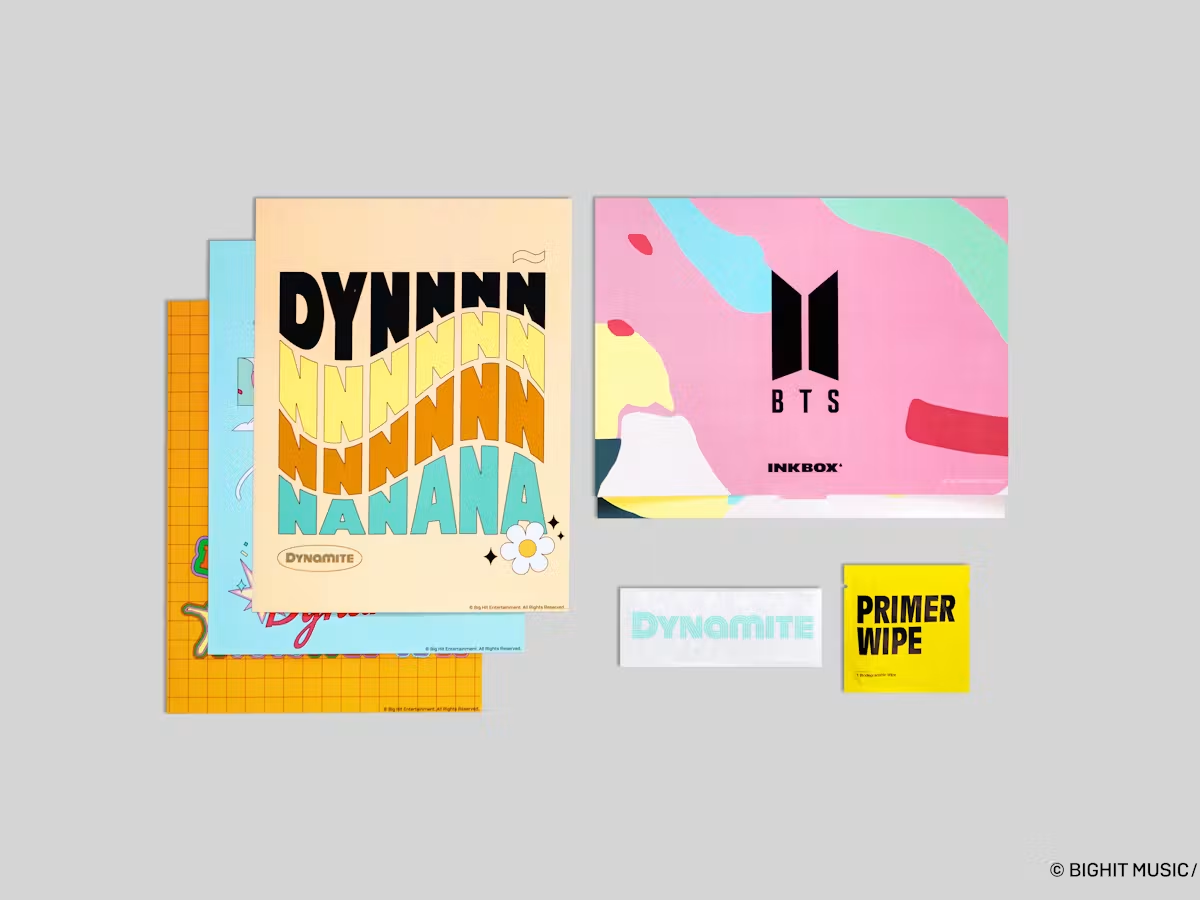
Image source: BIGHIT MUSIC
Third, continuously expand the product matrix.
The brand gradually expanded from a single temporary tattoo category to custom tattoos, tattoo pens, and gift box sets, using diversified products to drive overall sales.
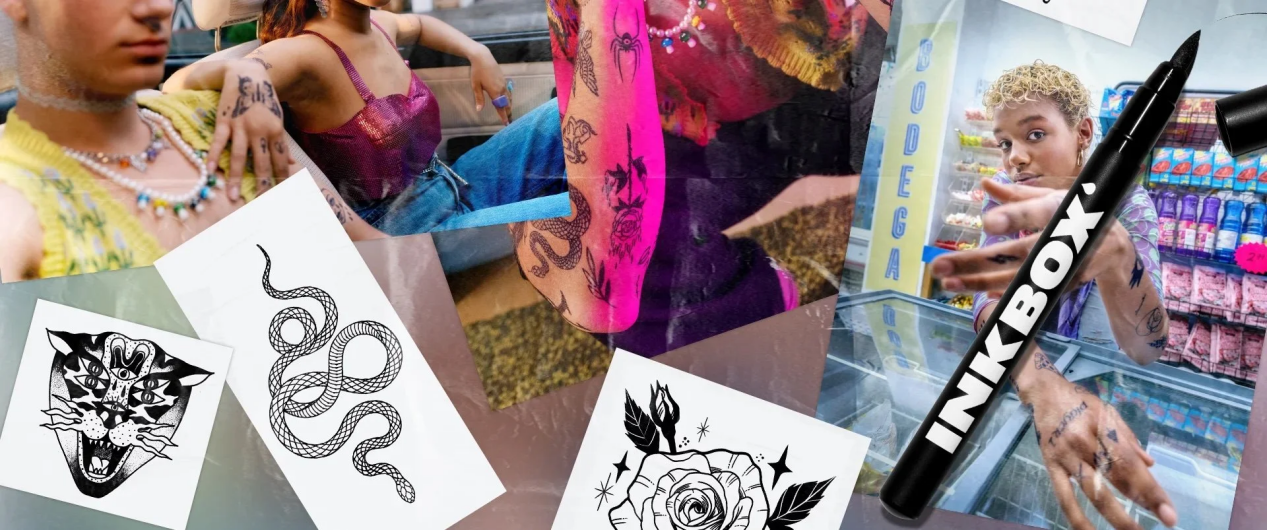
Image source: Google
Online and offline channels work together to generate revenue
High-quality materials and design must ultimately translate into sales conversion.
inkbox's overseas channel layout is equally impressive:The independent website serves as the core sales foundation, third-party e-commerce platforms supplement traffic, and offline stores and retail channels reinforce the brand's tone.
First, the independent website: this channel contributed most of the brand's revenue, with monthly site visits stable at 800,000 to 1 million.
The site retains users through a massive design library, custom tattoo services, set products, and an artist section, firmly holding pricing power.
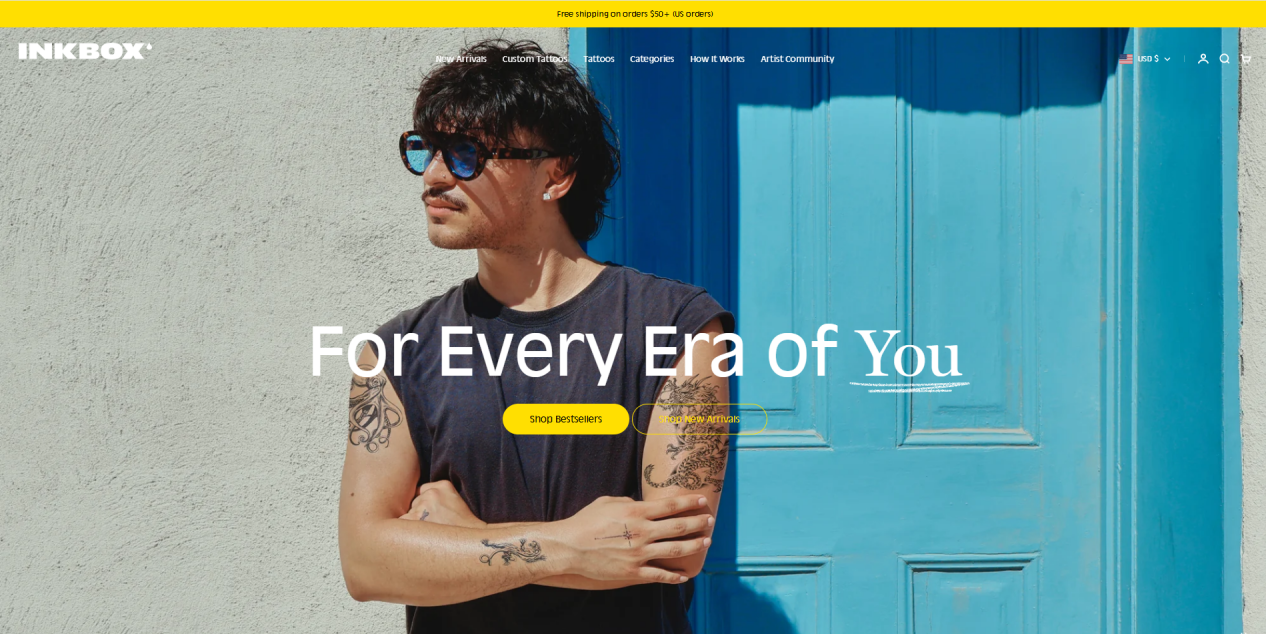
Image source: inkbox
At the same time, inkbox also entered Amazon North America and Europe as supplementary sales channels to capture search traffic. However, it does not engage in low-price competition, so it is not overly dependent on that platform.
On the offline side, it opened a physical store in its birthplace Toronto, displaying temporary tattoos as trendy accessories to create an offline experience space and strengthen brand quality. It has also reached cooperation with multiple offline retailers in Europe and the US, which in turn empowers its online premium pricing ability.
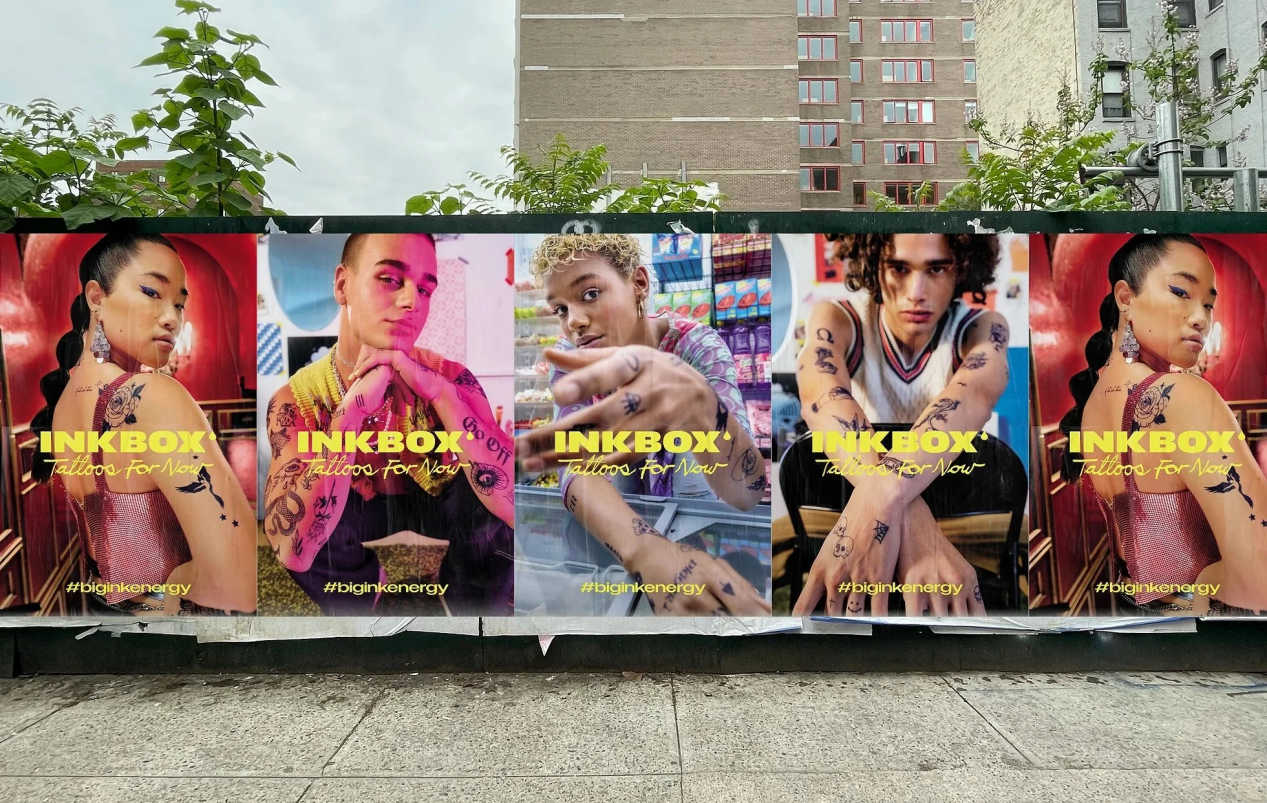
Image source: Google
This omnichannel sales layout has continuously driven the brand's performance growth:
In March 2022, co-founder Tyler Handley revealed while participating in Foundr Podcast, a business interview podcast, that the brand's historical peak revenue reached $30 million per year (equivalent to over RMB 200 million).
Social media seeding amplifies brand voice
Later, the inkbox brand was acquired by writing instrument giant BIC for $65 million.
After the acquisition, while retaining its original operating framework, the brand leveraged BIC's resources to accelerate global expansion, continuously increased its social media presence, went deep into platforms where young people gather such as TikTok, and used short videos for seeding to reach target audiences.
On TikTok, the brand built an official account @Inkbox. To date, it has reached 536,000 followers and a total of 13.1 million likes.
The account's content mainly consists of real-person footage and demonstrations of the process of applying tattoo stickers, using everyday product usage scenarios to shorten the distance between it and users.
At present, @Inkbox has a total of 3 viral videos with over 10 million plays, with the highest single video exceeding 13 million plays; there are as many as 25 videos with over 1 million plays.
Although the content format is simple and authentic, it wins by being close to daily life, capturing users' attention and retaining viewing time.
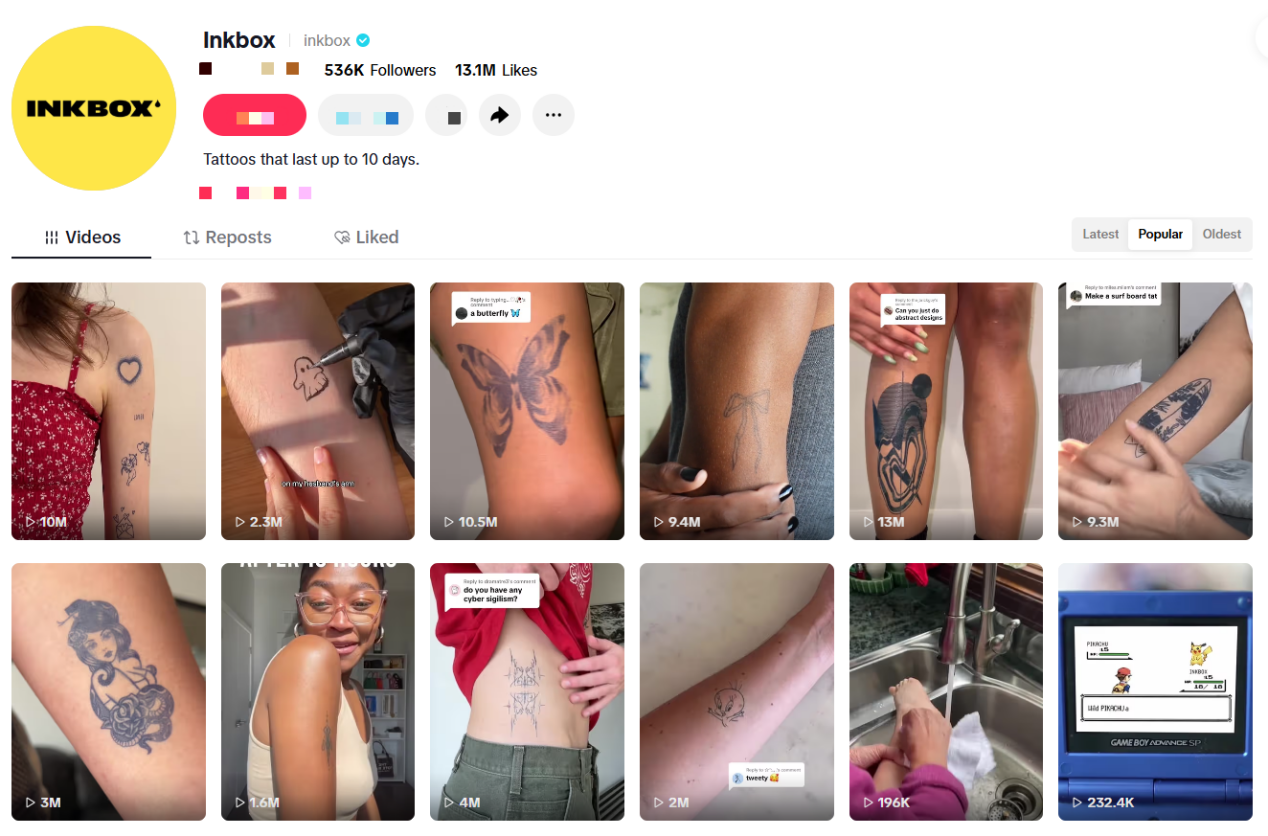
Image source: TikTok
However, self-operated accounts are more of a brand's external voice window, completing the transmission of brand philosophy and taking users from unfamiliarity to awareness. To reach potential consumers on a large scale and drive conversion, influencer collaboration is an indispensable part.
In its selection of influencers, inkbox also continues the brand's free and diverse style, not limited to fixed niches and follower counts; all kinds of influencers are included in its collaboration scope.
For example, TikTok fashion influencer @mollie rose, who has 41.2k followers, once made a sharing video for inkbox's tattoo stickers, demonstrating the process of using tattoo stickers to decorate fingers and create an atmospheric look.
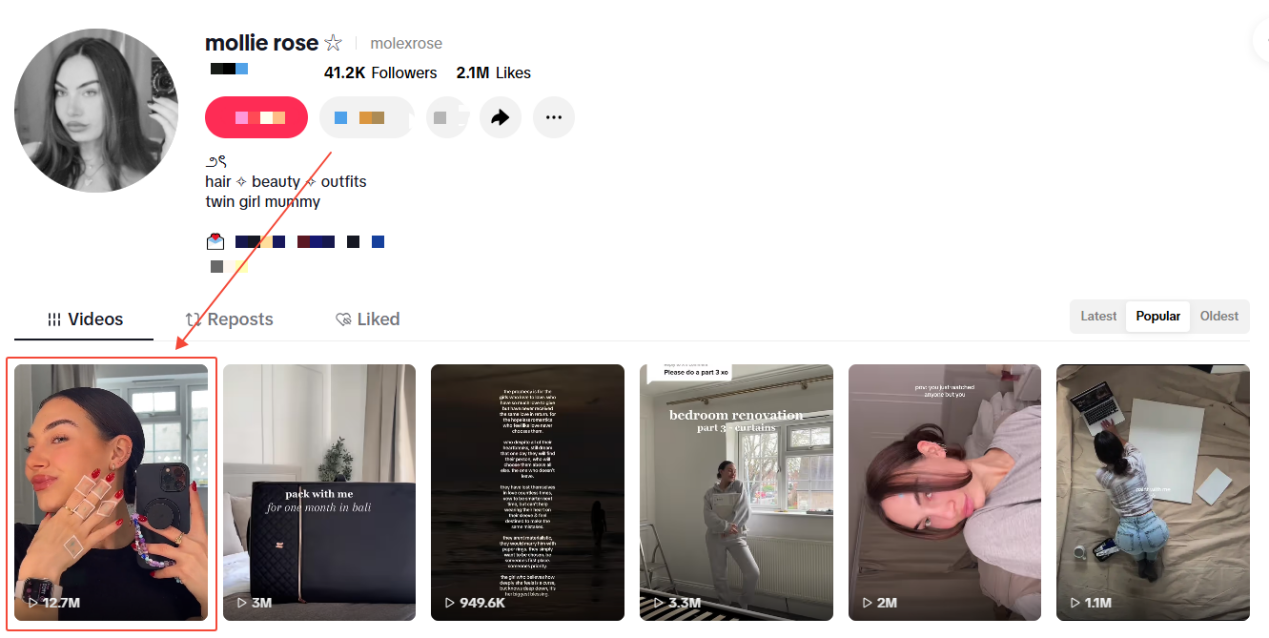
Image source: TikTok
Since its release, the video has received 12.7 million plays and more than 517,100 likes.
A large number of inquiries emerged in the comments section, with users asking about the durability and purchase channels of the tattoo stickers, bringing many intent inquiries that drive purchases.
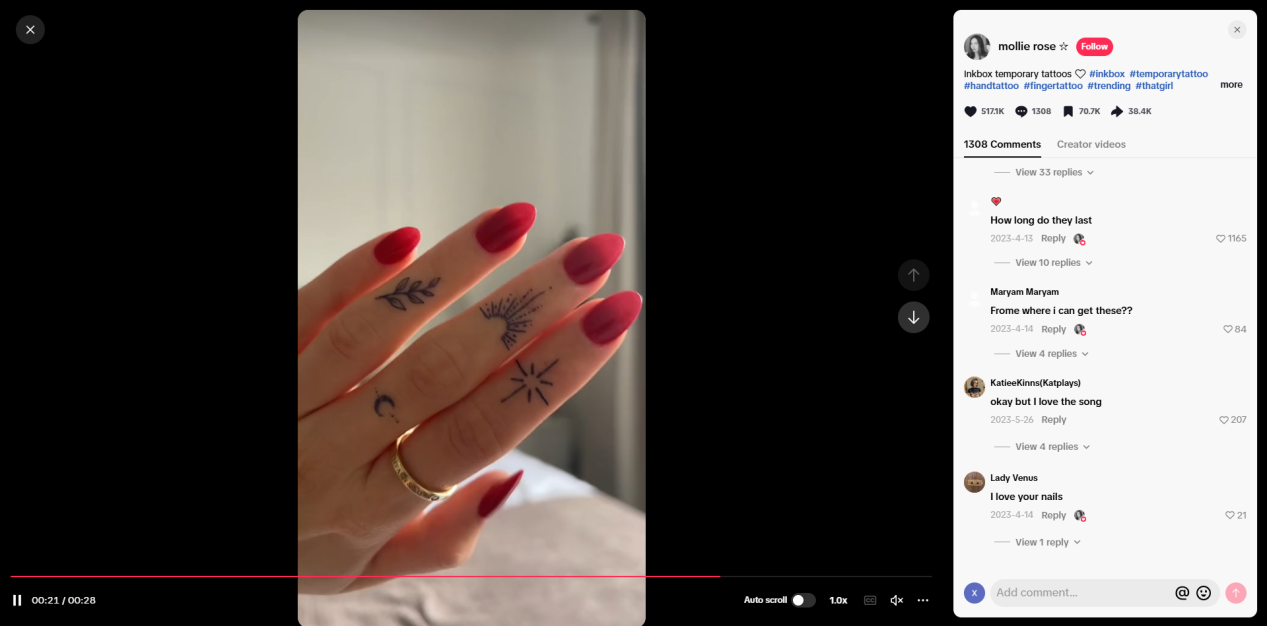
Image source: TikTok
In addition to small and medium-sized influencers, inkbox also collaborated with micro-influencer @emmy | sahm, who has only a few thousand followers. Although such accounts have a small follower base, the conversion effect of short review videos is very impressive.
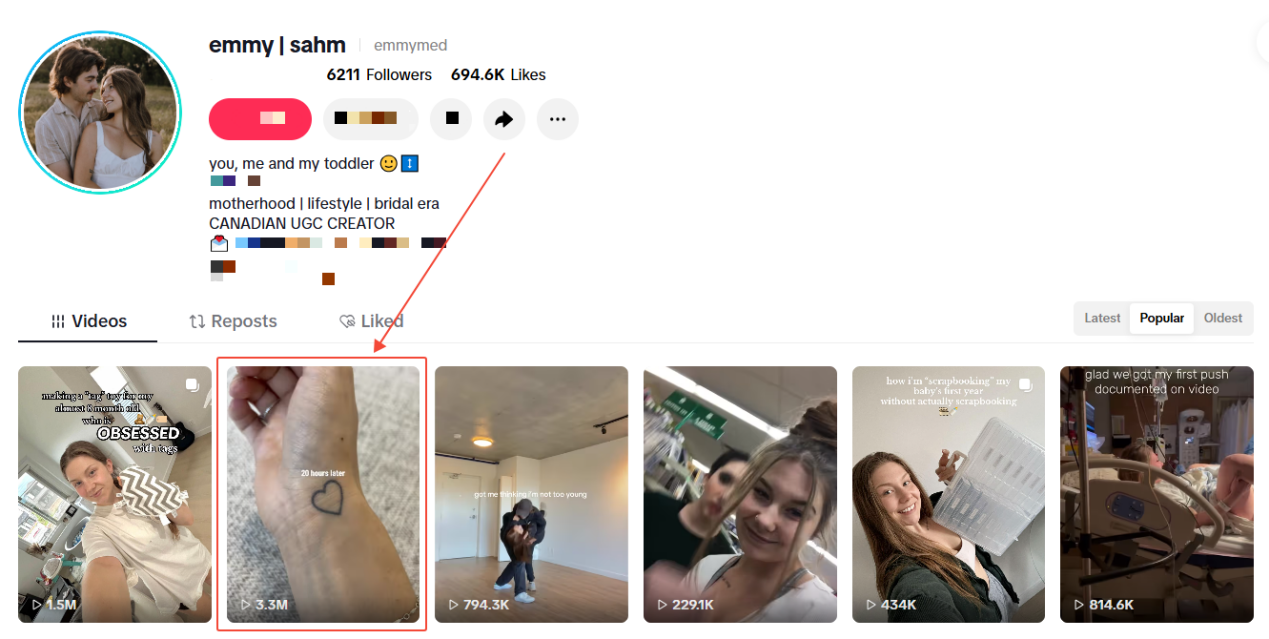
Image source: TikTok
In the video, the influencer conducted a simple test on inkbox's tattoo stickers. After 20 hours of application, the color and outline of the pattern were still intact.
At present, the video's play count has grown to 3.3 million and received 142,000 likes.
This kind of real test intuitively shows the product's long-lasting effect, making it easier to move users who are still observing, and effectively driving order conversion at the end.
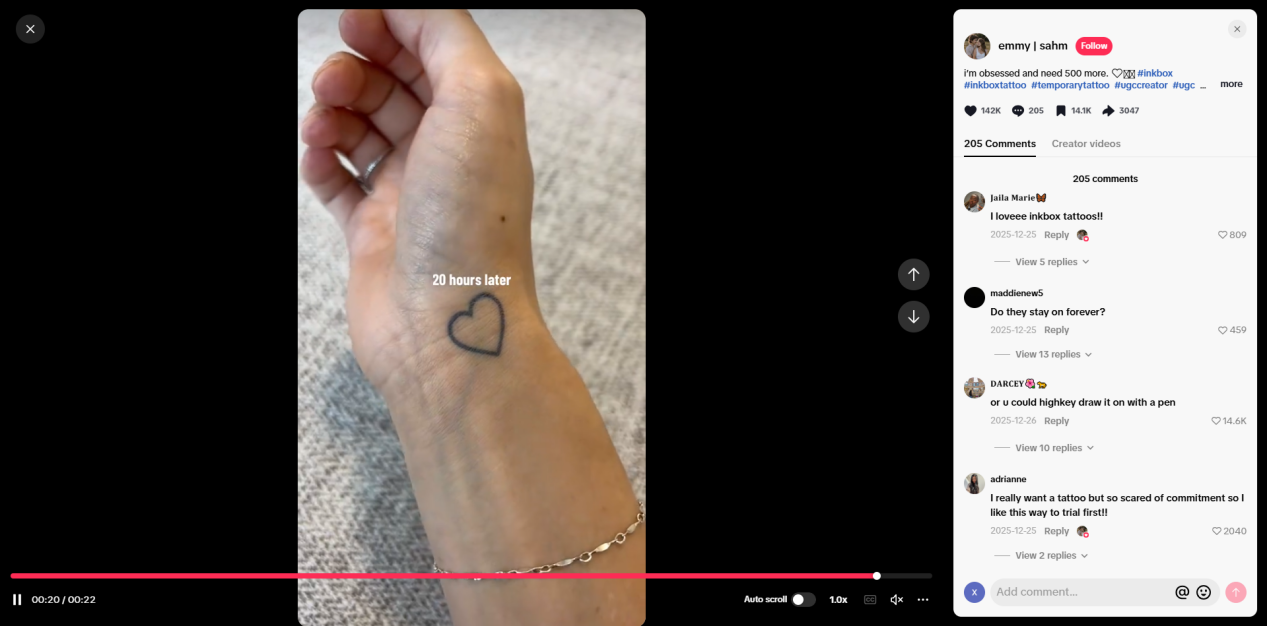
Image source: TikTok
Conclusion
Nowadays, consumers in overseas markets do not only look at price; they are willing to pay for products that truly solve pain points.
The tattoo sticker category may be classified as a small commodity in China, but overseas, it has been turned by inkbox into a good business with design barriers and inherent brand tonality.
This also brings inspiration to domestic brands planning to go overseas:
You do not necessarily have to chase the hottest track, nor do you have to wait until the product is perfect before setting out. Many times, first gaining a firm foothold in a certain niche demand, then step by step filling in channel and content capabilities, is actually more prudent than spreading a big stall from the start.
The rules, aesthetics, and consumption habits of overseas markets are all different from those in China; these differences themselves are opportunities. Whoever can turn differences into product advantages can find their own position in the competition.