 176
176Over the past year, pet tech hardware has undoubtedly been one of the hottest tracks in cross-border e-commerce overseas.
From smart litter boxes to automatic feeders, from pet cameras to smart water fountains, a large number of brands going overseas have rapidly risen through channels such as TikTok and Amazon, making a significant splash in overseas markets.
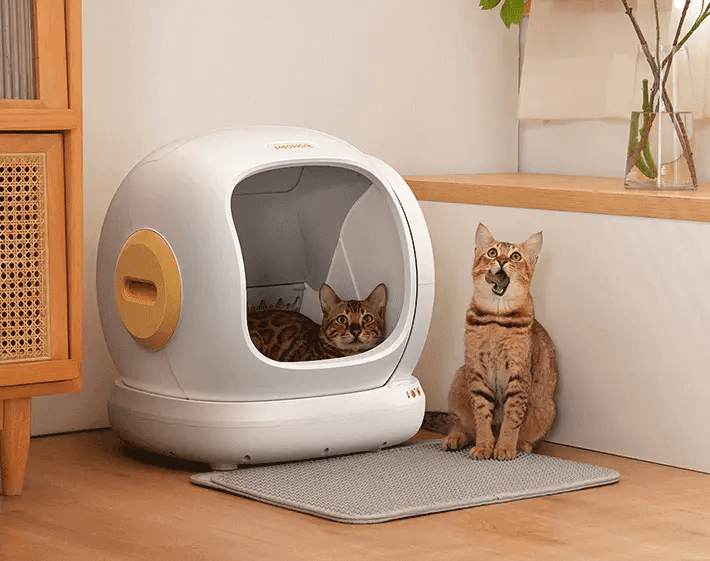
In this wave, a name frequently appears on TikTok's pet category sales charts—MeoWant.
Data shows that MeoWant's total sales in its official TikTok US store have reached $29.6777 million, with $463,800 in sales contributed in just the last 30 days. Across the entire TikTok pet supplies track, such performance is enough to place it in the top tier.
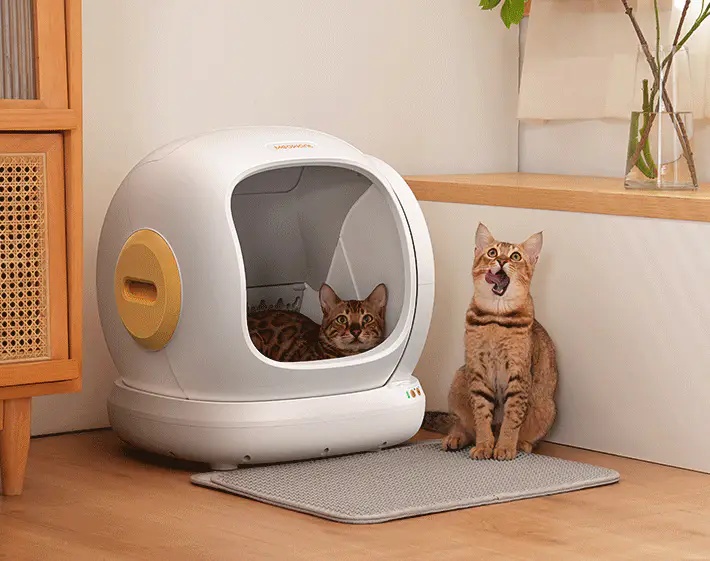
Image source: MeoWant
From pet supplies to smart technology
MeoWant's story begins in 2013. Founded in the United States by a team of pet-loving entrepreneurs, the brand initially focused on designing comfortable and practical pet home and cleaning supplies. At that time, smart pet devices were not as widespread as they are today, and the team developed products based more on pets' actual user experience.
The turning point came after the global rise in smart pet consumption. MeoWant judged that pet owners' demand for 'automation' and 'health monitoring' was exploding, so it decisively shifted to developing IoT smart pet devices, focusing on automatic cleaning and health monitoring. This decision later proved to be crucial.
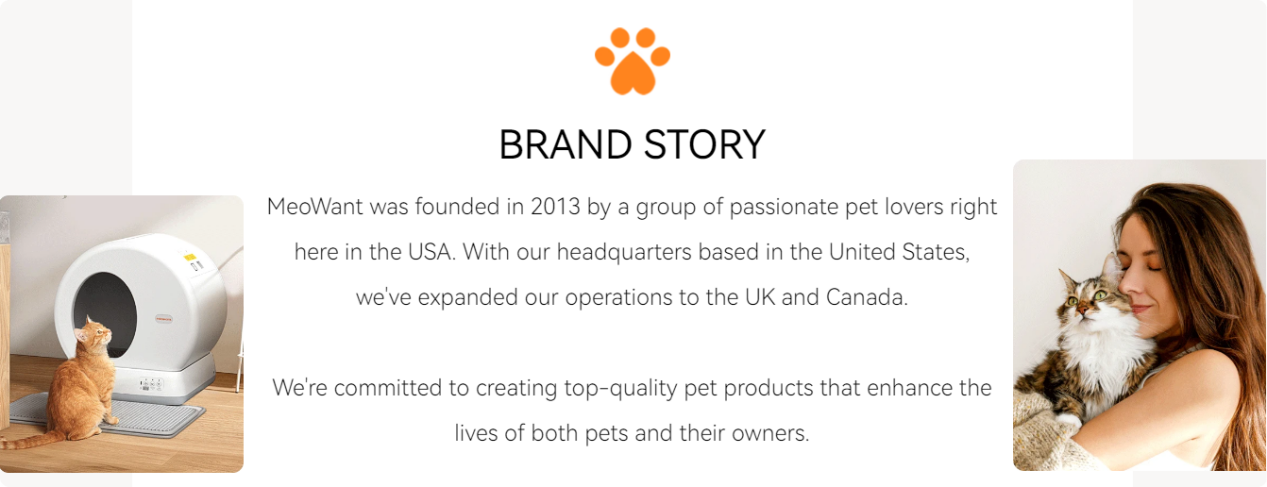
Image source: MeoWant
What truly opened the market for MeoWant was the MW-SC01 series smart litter box. The most notable features of this product are its 15 cm ultra-low threshold and 45 cm widened entrance design, making it extremely friendly for short-legged cats, senior cats, and large-breed cats.
Traditional smart litter boxes generally have high thresholds of over 20 cm and narrow entrances, causing 28% of senior cats and large-breed cats to face difficulties in using them. MeoWant precisely seized this gap in demand that mainstream brands had overlooked.
Subsequently, the brand launched upgraded MW-SC02 and SC09 series, optimizing the hatch entrance and rotation cleaning logic, and incorporating multiple safety sensor systems. With the smart app, users can remotely monitor cats' weight changes and elimination frequency.
Currently, MeoWant's products have reached 2 million consumers worldwide, with its market extending from the United States to the United Kingdom, Canada, and multiple European countries.
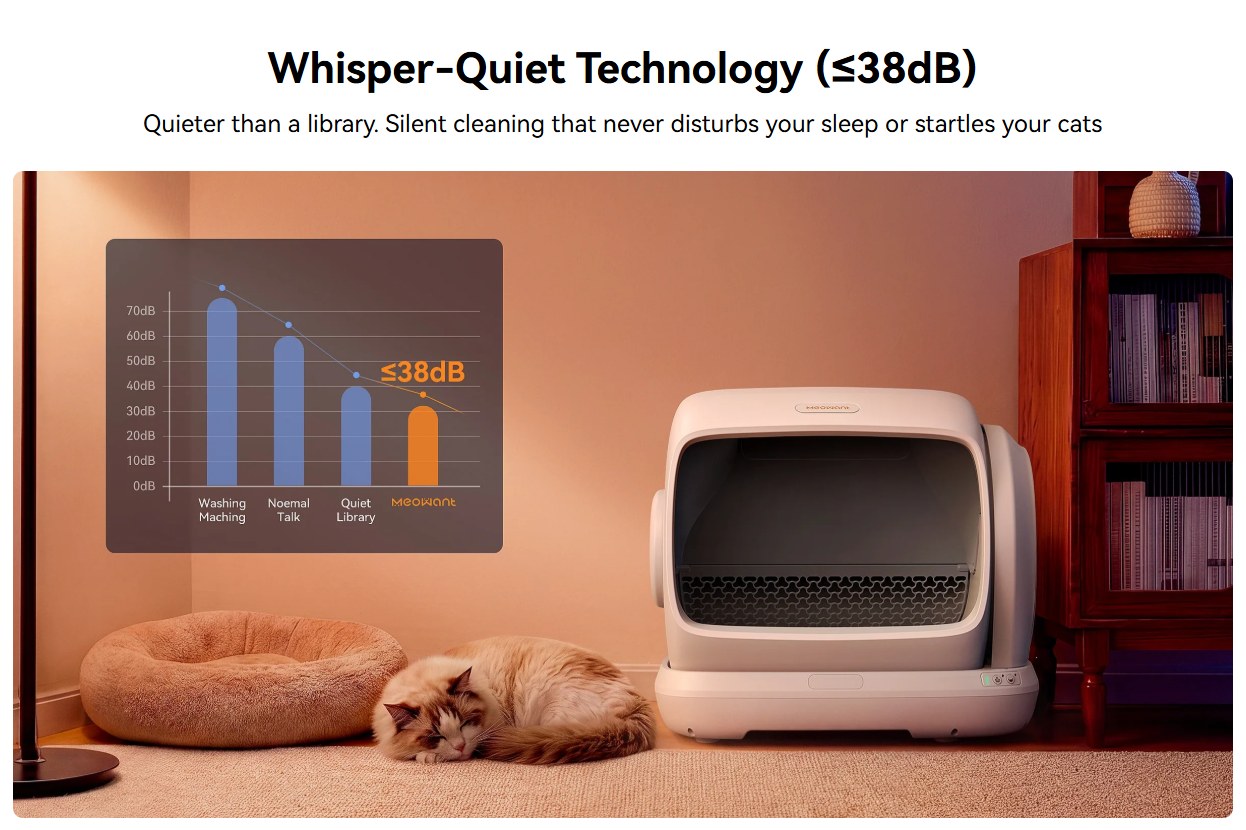
Image source: MeoWant
The trend of smart pet products provides a market foundation for brand growth.
MeoWant's explosion is not accidental; behind it is the continued heating up of the entire pet tech track.
From a macro data perspective, the global pet supplies market size has reached $346 billion in 2025, and is expected to approach $644 billion by 2034, with a compound annual growth rate of about 7.1%.
Among them, pet tech is the fastest-growing sub-sector. In 2025, the global market size is about $9.23 billion to $12.47 billion, and by 2031 it is expected to grow to $26.32 billion, with a compound annual growth rate exceeding 13%.
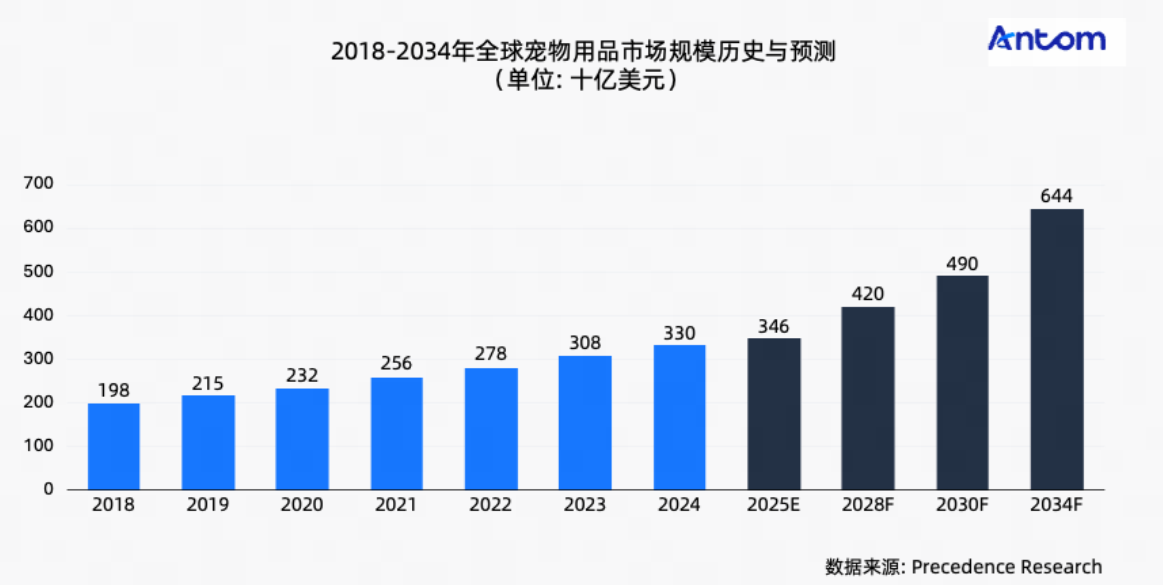
Image source: antom
Several key forces drive this growth.
First is the "pet humanization" trend, where pets are regarded as family members, and consumption willingness aligns with humanized standards. In the United States, more than half of pet owners consider pets as family. Second is the generational shift in consumer groups, with Gen Z and millennials becoming the main force of pet ownership. Gen Z pet-owning households are growing by 43.5% annually and are more willing to pay a premium for smart and health-related products.
On TikTok, views of cat- and dog-related hashtags have reached 38.1 billion and 30.8 billion times respectively, fully demonstrating this group's content consumption preferences and purchasing potential.
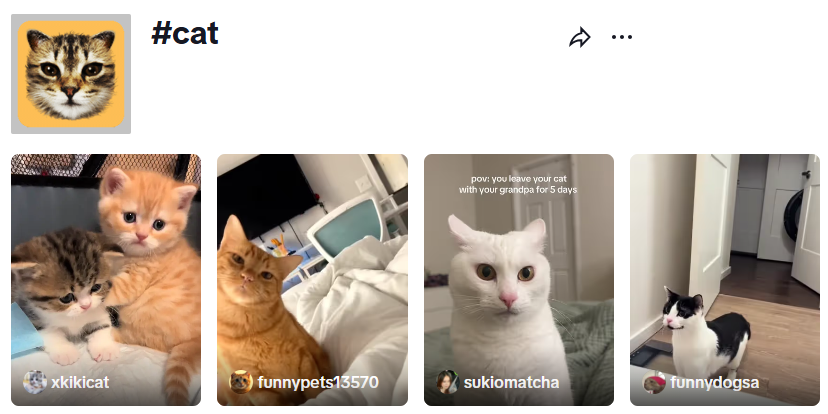
Image source: TikTok
The 'content + affiliate + closed loop' strategy on TikTok
For smart pet products, relying solely on traditional advertising campaigns makes it difficult to fully convey the product's value.
Therefore, MeoWant's focus on TikTok is not simply about displaying products, but about content marketing centered around real pet-raising scenarios.
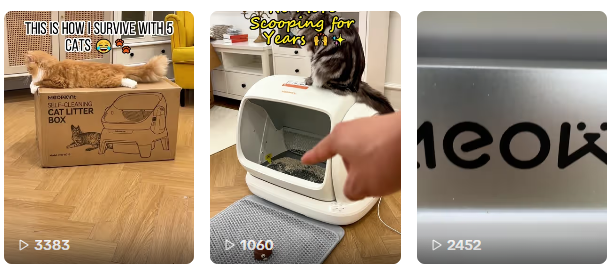
First, the brand fully leverages the 'effect visualization' feature of the smart litter box.
For example, common content formats on TikTok videos include:
'How troublesome is it to clean the litter box every day after getting a cat?'
'Does an automatic litter box actually work?'
By first showing the pain points of cat ownership, then showcasing the product in action, and finally presenting the changes after use, consumers can quickly understand the product's value.
This content structure of 'problem demonstration — product solution — effect feedback' fits TikTok users' viewing habits very well.
Source: TikTok
Second, MeoWant is also actively leveraging influencer marketing to expand its reach.
According to third-party data platform statistics, in the past 30 days, the number of influencers collaborating with MeoWant reached 1,077. Through the TikTok Affiliate system, the brand has partnered with a large number of creators in the pet niche.
Some influencers have already generated notable sales conversions. For example, influencer @smartechfind brought in approximately $134,600 in transaction value over the past 30 days, while @cantrvision generated approximately $42,900.
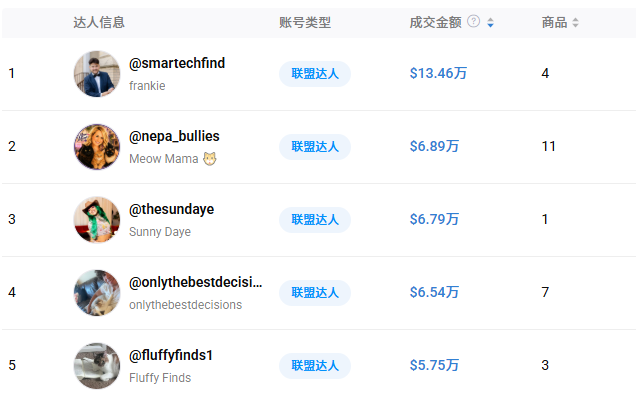
Source: kalodata
Compared with direct brand advertising, pet influencer content is more likely to build consumer trust.
For example, some creators record a cat using an automatic litter box for the first time, show the cleaning process, compare it with traditional litter boxes, and thus integrate the product into everyday life scenarios.
This content format reduces consumers' hesitation about whether smart devices are worth buying.
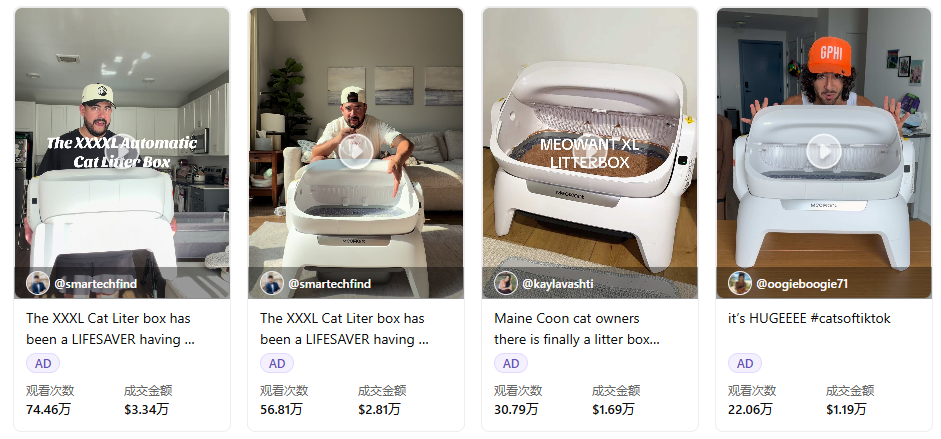
Source: kalodata
Taking a promotional video posted by TikTok influencer @smartechfind as an example, the video revolves around whether a smart litter box can improve the cat-raising experience. By displaying the product's appearance, its operation process, and the cat's usage scenario, it reinforces the core selling points of 'saving time and energy.'
Data shows that the video received only 1 million views and generated $58,600 in transaction value. Among them, video ad views accounted for about 20.07%, ad-driven transactions accounted for 75.31%, ad spend was about $15,400, and ultimately achieved an ad ROAS of 2.87.
It can be seen that this type of video content, which directly demonstrates product effects, not only increases user interest, but also effectively drives subsequent purchase conversions.
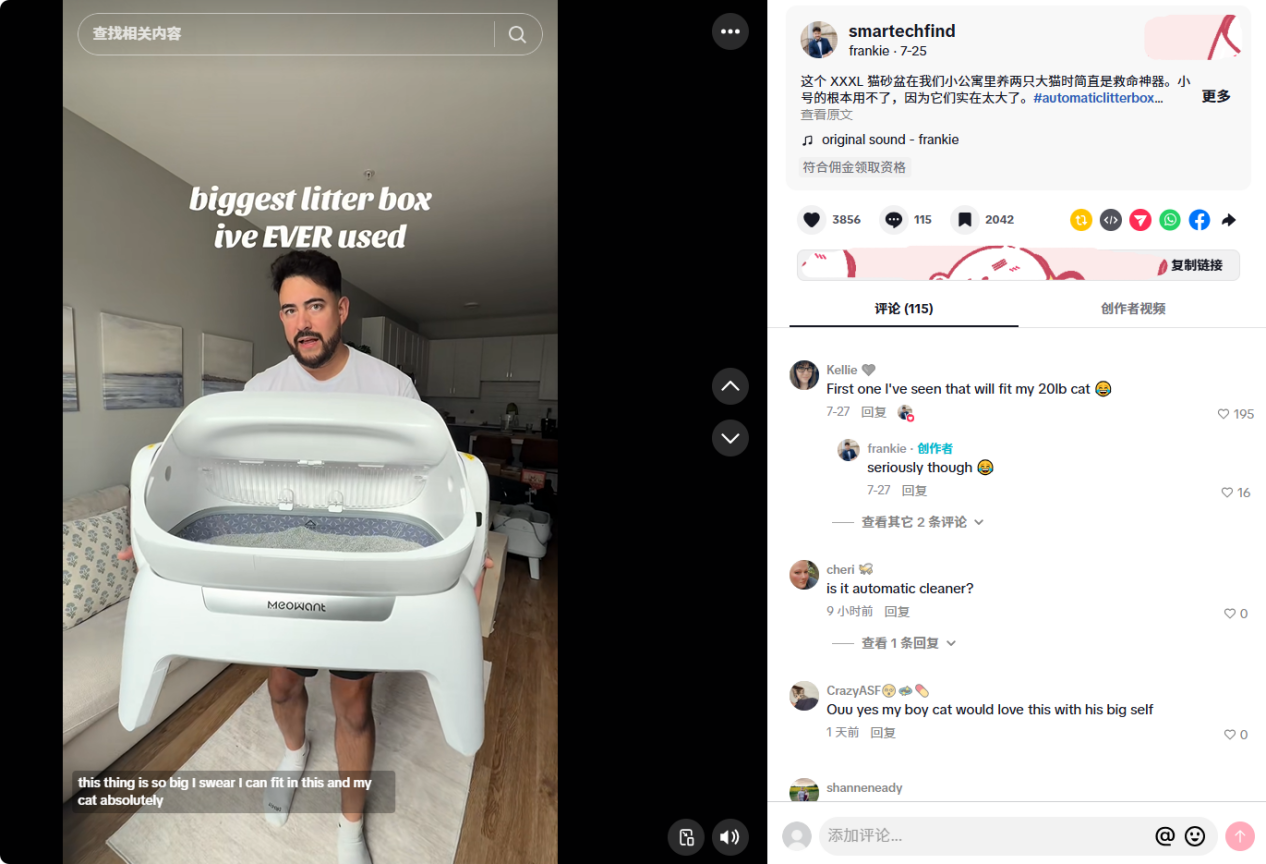
Source: TikTok
Video source: TikTok influencer @smartechfind
In addition to influencer partnerships, MeoWant also continuously operates its official brand account, forming a sales loop through short videos and TikTok Shop.
Judging from its recent videos, MeoWant is not only continuing to showcase product usage scenarios, but also beginning to experiment with AI digital human formats to enrich content expression. By using AI-generated virtual characters for product introductions and function explanations, the brand can produce short video content more efficiently while reducing costs associated with live appearances and content production.
For products like smart pet supplies that require ongoing consumer education, AI digital humans can help brands quickly convey product selling points and better align with the evolving trends in content production on short-video platforms.
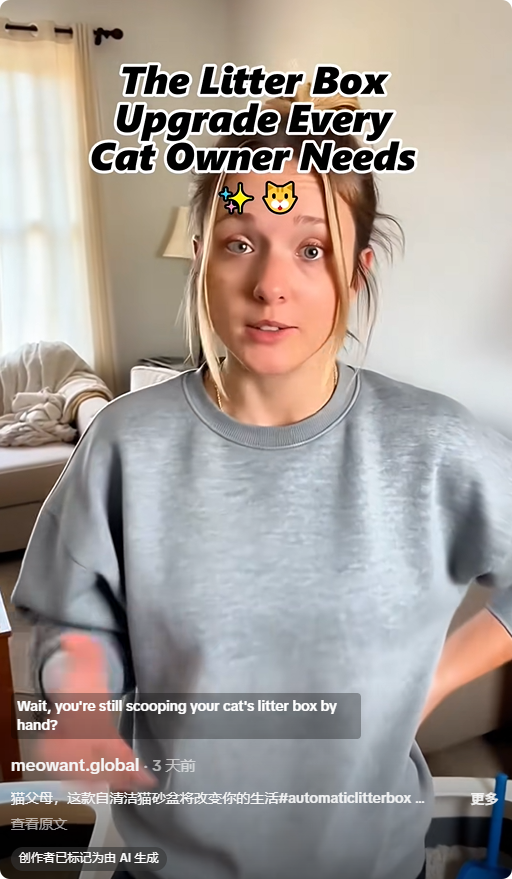
Image source: TikTok
Conclusion
From the development of MeoWant, it can be seen that competition in overseas markets is no longer just between products, but a comprehensive competition involving products, content, and channels.
For smart hardware brands, overseas consumers often need to understand the product's value before making a purchase. Therefore, using short videos to show usage scenarios, leveraging influencers to build consumer trust, and then using TikTok Shop to complete transactions is becoming a new path increasingly explored by brands going global.
In the future, brand globalization is not just about selling products overseas, but more importantly, understanding local consumer needs and establishing connections through content and marketing methods that align with local user habits. For companies looking to expand overseas, how to leverage digital channels to enhance brand influence may become a key factor determining long-term development.