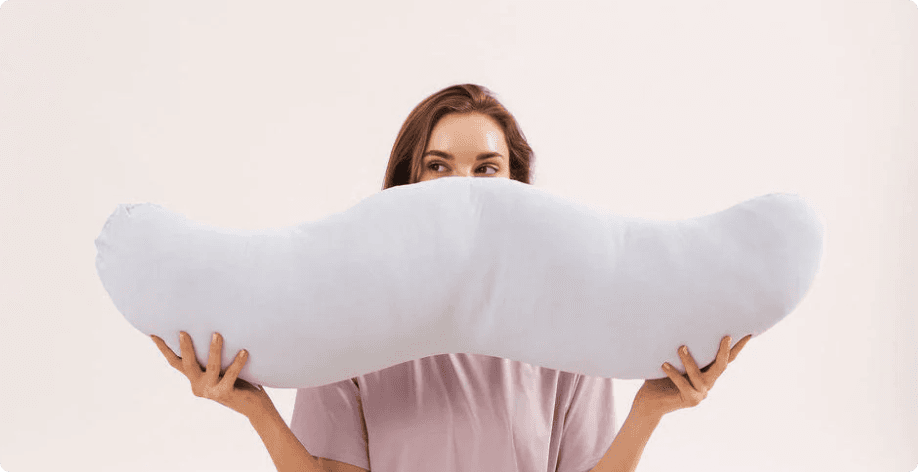
Life is only about thirty thousand days, and when you calculate it, nearly one third is spent in bed.
The sleep economy is no longer a new term nowadays. Previously, Wang Teng founded "Today Rest" and received multiple rounds of capital investment, and later various black technology sleep devices swept crowdfunding platforms. All point to the same fact—getting a good night's sleep is becoming something more and more people are willing to pay for.
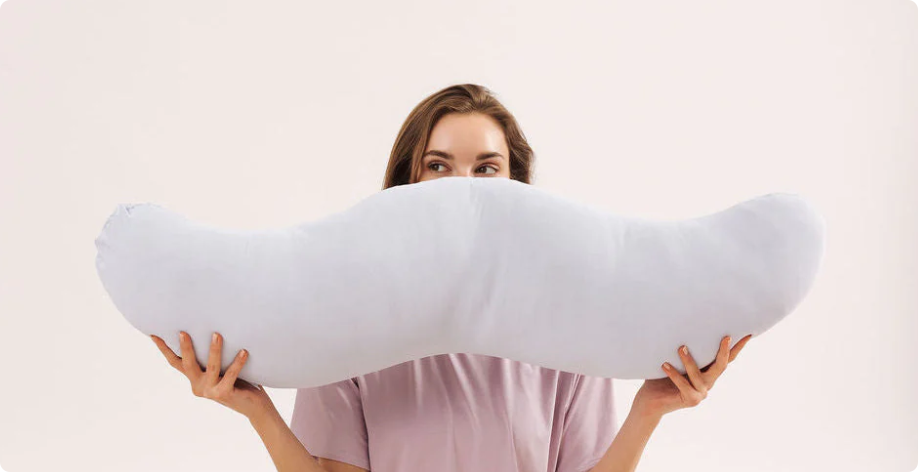
Across the ocean in North America, a DTC sleep technology brand calledMellow, in just 9 months, delivered a sales report card of $110 million, becomingthenew benchmark in the global sleep economy track.

Image source:Mellow
The Birth of a“Sleep Experience Company”
Mellow is not a fast-food brand that relies on capital to buy traffic; its birth carries a bit of a “geek spirit” of persistence.
The brand's co-founderChad Kelleronce said:“Mellow is definitely not just a home bedding company, but a brand focused on creating immersive sleep experiences.”
In their view, the brand name“Mellow” (gentle, soft) is meant to convey a sense of softness, comfort, and healing sleep quality to consumers.
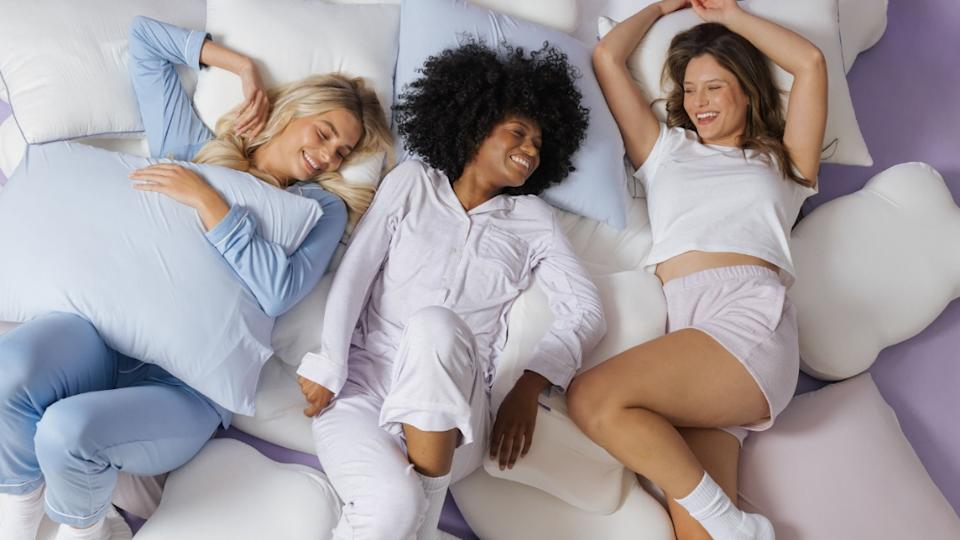
With this infrastructure-building mindset,Mellow went through a long period ofexploration.In order to achieve breakthroughs in memory foam materials, they focused on three core technologies: temperature modification, breathable fabric development, and ergonomic support structure. They tested hundreds of material formulas before finally overcoming the challenges.

Image source:Mellow
At the beginning of 2025, Mellow was officially registered in Delaware, USA.
They did not choose the traditional supermarket distribution model, but instead adopted the highly sensitive“independent site + TikTok” pure digital DTC (direct-to-consumer) approach, pouring all their precious funds into product refinement and contentpromotion.
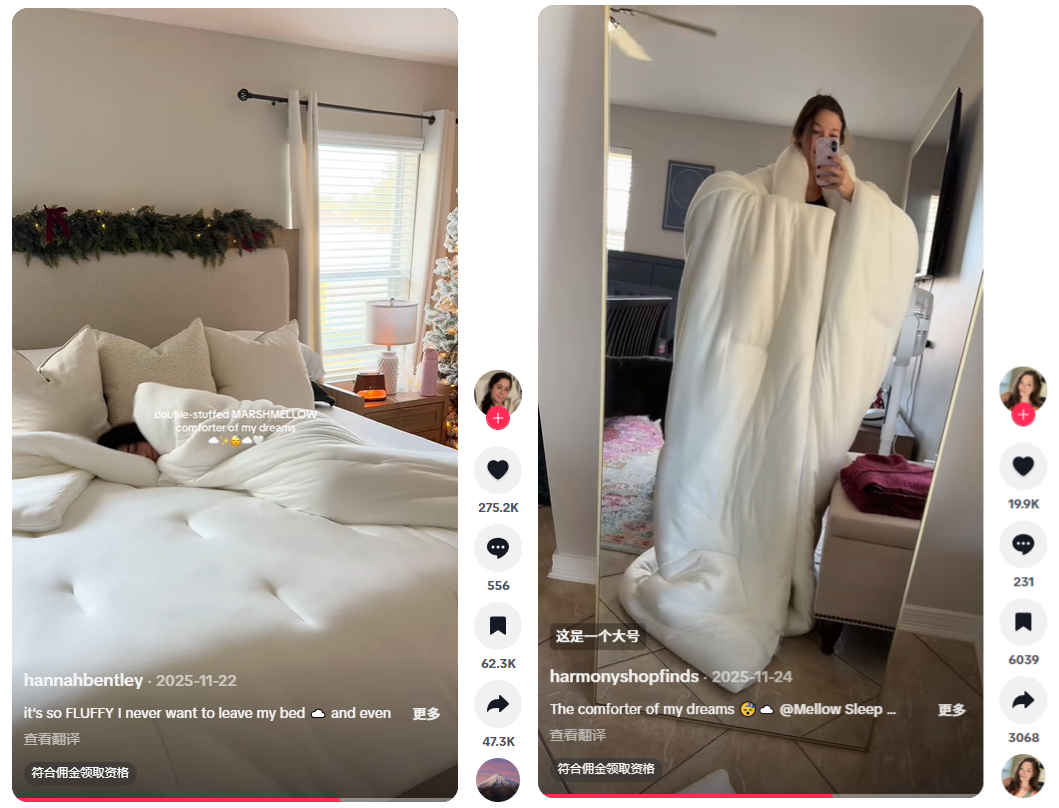
That same year, their first blockbuster product——MarshMellowComfortwas launched, featuring a double-layer breathable structure combined with eucalyptus fiber, achieving temperature control for warmth in winter and coolness in summer. This seemingly“hardcore” home product became a viral hit on TikTok thanks to short videos, and its single product sales have now reached $7.18 million.
Now, Mellow, which has already established itself in online consumer demand, is beginning to expand its influence into offline physical retail.

Image source:TikTok
“Good Sleep” Is a Real Business
Mellow's rapid rise certainly cannot be attributed solely to the product itself.
Globally, the sleep industry has already formed a composite large market covering products, technology, medical care, and services.
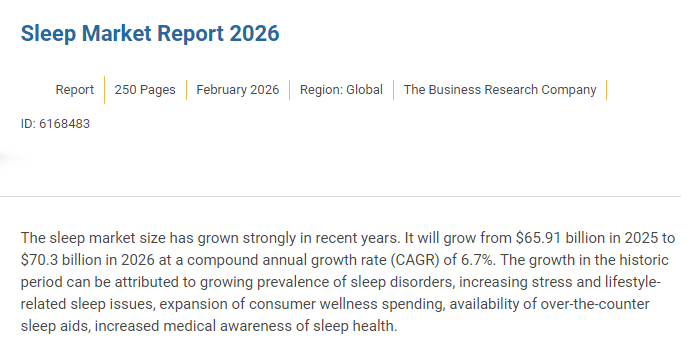
According to a report released in January 2026, the global sleep market size in 2025 was $65.91 billion, and is expected to grow to $70.3 billion in 2026, with a compound annual growth rate of 6.7%. This means that bedding is not an industry that relies only on seasonal fluctuations, but a long-term expanding consumer market.
At the same time, consumers' willingness to pay for“good sleep” has significantly increased. They are willing to pay a premium for material innovation, technological endorsement, and real experience, which gives DTC brands like Mellow, focused on product R&D and data-driven approaches, an excellent window of opportunity.
Image source:Research and Markets
OnTikTok, “making people feel comfortable” is enough
OpenMellow's official TikTok account @mellow, and you'll find their content logic is extremely clear. Since bedding cannot convey real tactile sensations through the screen, they compensate for this defect with visual substitution.
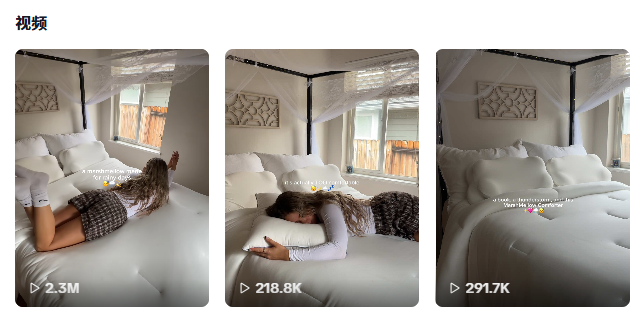
First isimmersiveusage scenarios. People lying under the quilt, resting on pillows, without speaking, their body language itself conveys a“so comfortable you don't want to get up” feeling. These videos often get huge traffic because users feel a strong sense of immersion when they swipe by.

Image source:TikTok
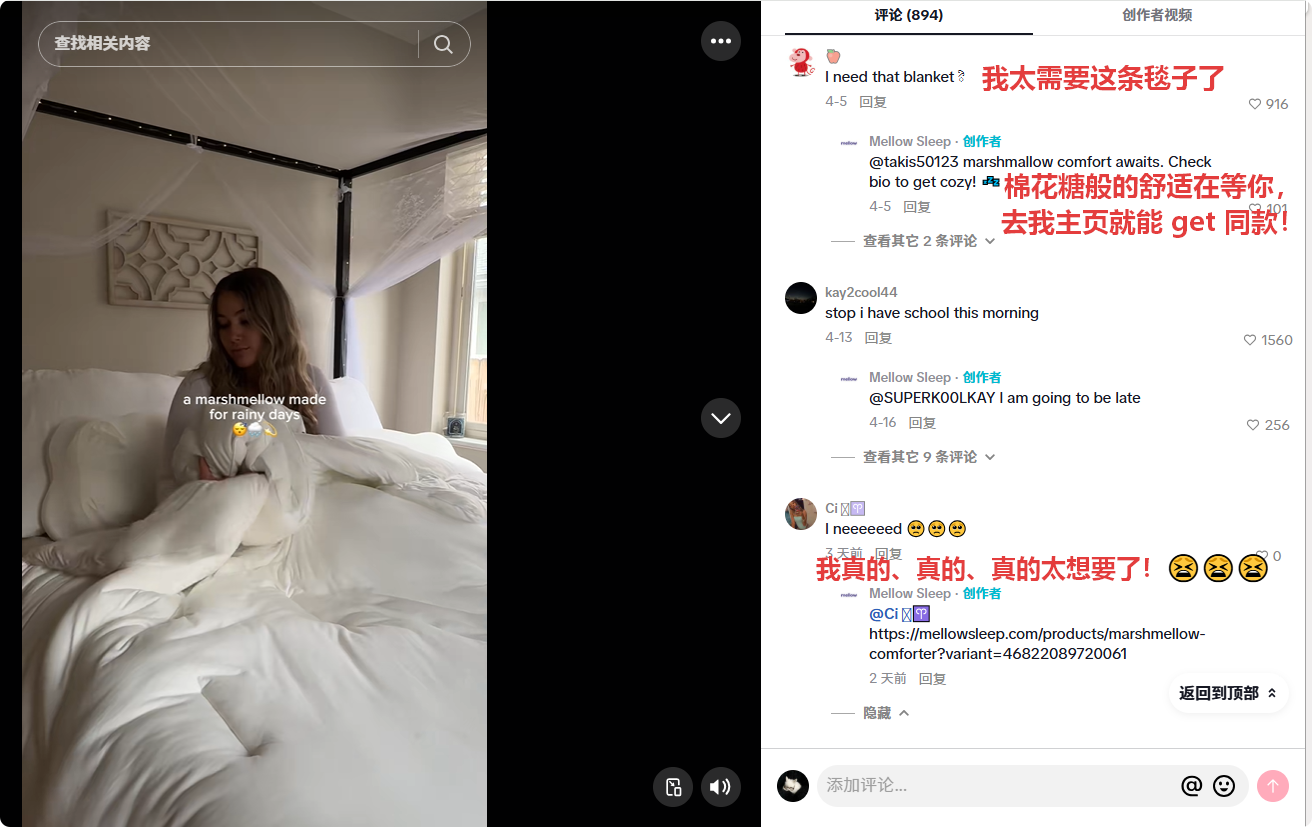
For example,@mellow posted this video in April, with a simple scene—a person wrapped in a quilt curled up in bed, it's rainy outside, and the caption is just “Rainy days were made for this comforter.”
Such a simple video got2.3 million views, and many users in the comments expressed their desire for it.

Image source:TikTok
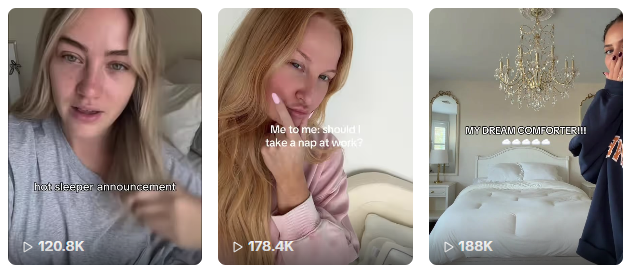
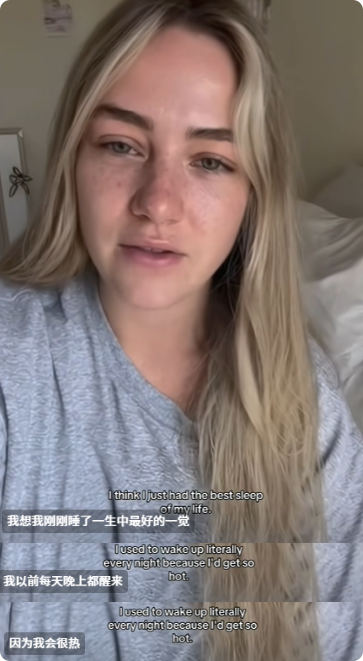
Secondis user experience feedback. Users share their feelings after sleeping for a few nights in the video, such as“I used to wake up hot in the middle of the night, but after switching to this quilt, I sleep through the night” “My neck is no longer sore, and my shoulders feel much lighter after getting up.”
There is no deliberate product display, more like a recommendation between friends. This real feedback from ordinary people is more persuasive than any advertisement and more likely to spark questions and discussions in the comments.

Image source:TikTok

Image source:TikTok
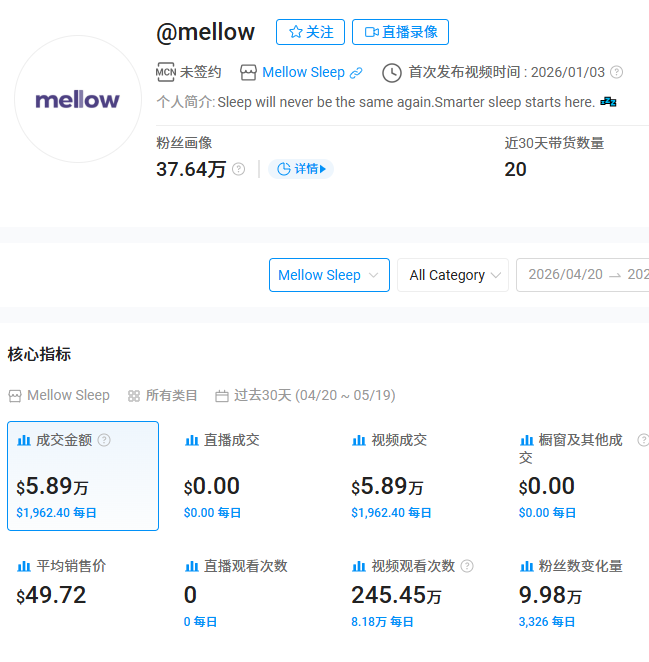
According to the latest platform data monitoring,@mellowhas now accumulated as many as378,000 followers, with very high activity. In the past 30 days, its sales reached $58,900.
For a self-operated account,to achieve such results is enough to prove its social media operation is very solid.

Image source:kalodata
However, in the entireMellow sales system, influencer sales still occupy an absolutely dominant position.
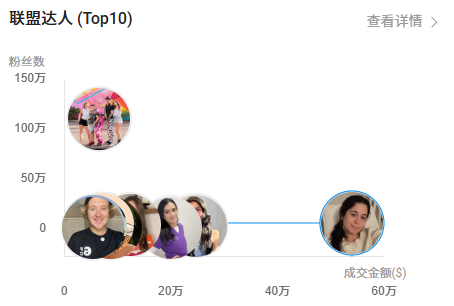
According to third-party monitoring platform data from the past30 days, Mellow's total transaction amount on TikTok is about $4.0286 million, of which affiliate influencers contributed $3.9579 million, accounting for as much as 98.25%.
It can be said that the brand has almost entrusted the entireTikTok sales to the influencer ecosystem.

Image source:kalodata
Mellow's strategy is a typical combination of “top influencers amplifying voice + mid and tail influencers broad spectrum volume.”
TopKOLs are responsible for igniting brand tone and category awareness, while many tail influencers and even ordinary bloggers continuously output authentic recommendation content at low cost.

Image source:kalodata
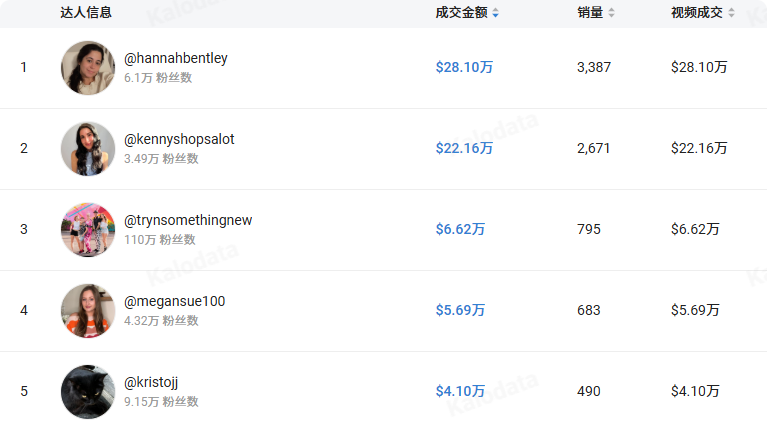
Takethe brand's currentblockbuster productMarshMellow as an example,in theinfluencerrankingyou can seeboth@hannahbentley, a mid-level influencer with 61,000 followers (single video sales $281,000), and @trynsomethingnew, a top influencer with 1.1 million followers (sales $66,200).
Influencers of different levels contribute, ultimately forming large-scale sales conversion.

Image source:kalodata
Final Words
Mellow completed in less than a year what traditional home textile brands need several years or even more than a decade to accomplish, which is enough to show that the ceiling of the overseas sleep consumer market is still far from reached.
Today, the global sleep economy is undergoing a cognitive leap from“essential furniture” to “health tech consumer goods.” North America, as the world's largest sleep consumer market, still has a lot of segmented needs and blank categories waiting to be explored. In this context, China's supply chain capabilities in product innovation and cost optimization are precisely its biggest trump card.
For domestic companies that are going or preparing to go Tuke, instead of “competing on price” in a stock market, it's better to find a real user pain point, solve it with a product, and then amplify it with good content on interest e-commerce platforms like TikTok. An incremental market is just beginning, and there is always a field worth putting some effort into.